
As I stood in my kitchen, the tantalizing aroma of sizzling garlic filled the air, instantly transporting me to a vibrant street market where the flavors of Mongolian cuisine come alive. It’s moments like these that inspire me to recreate the magic at home, especially when I’m looking to break free from the monotony of takeout.
This Mongolian Beef recipe is a true crowd-pleaser, blending tender marinated flank steak with the perfect balance of sweetness and umami. Each bite bursts with flavor, while the beautiful presentation of the dish makes it perfect for everything from a quiet evening at home to entertaining friends.
What truly sets this recipe apart is how effortlessly it comes together. With just a few simple ingredients and minimal prep, you can whip up a gourmet meal that’ll have everyone asking for seconds. Let’s dive into this culinary adventure and bring a taste of Mongolia straight to your kitchen!
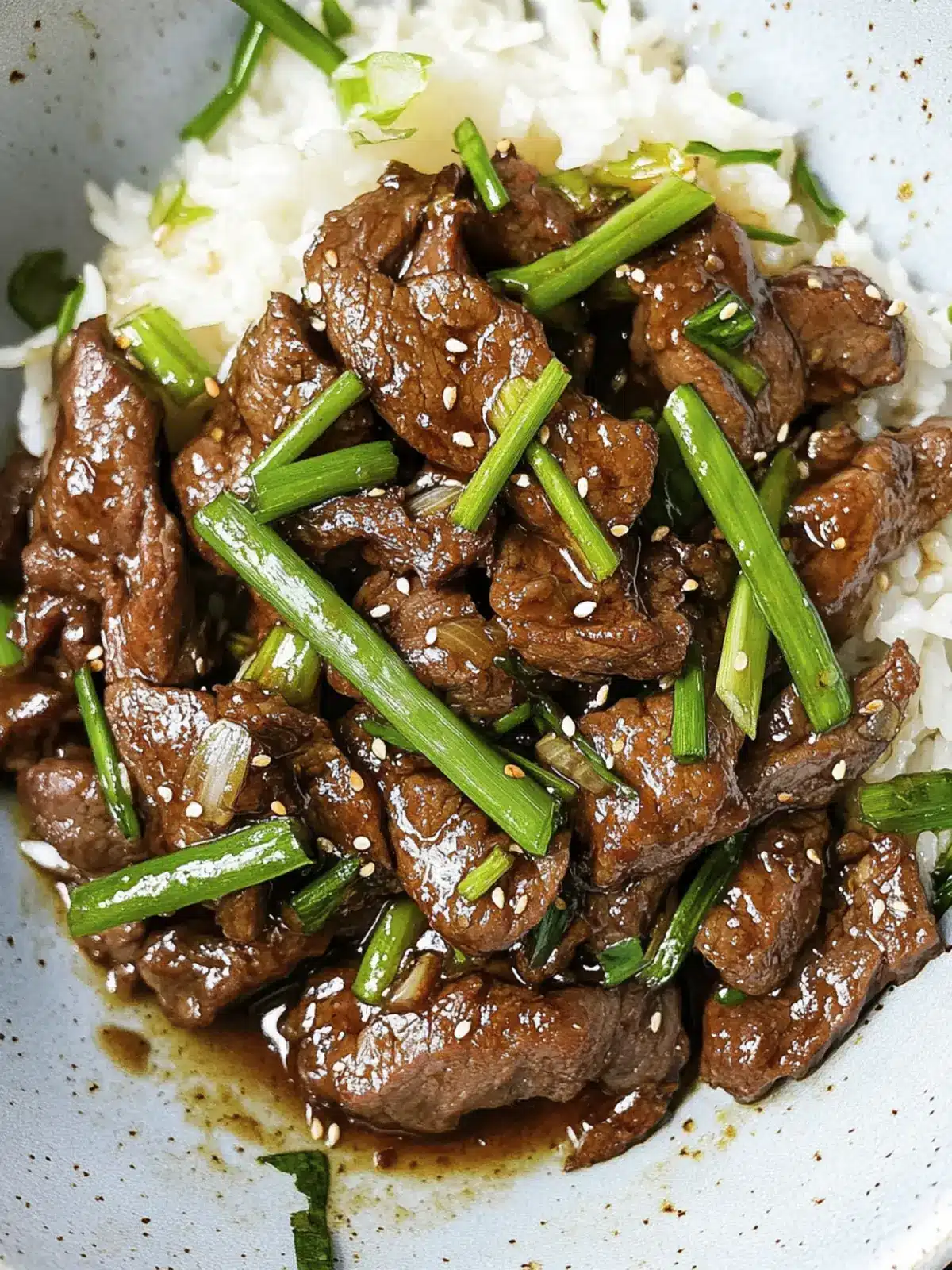
Why is Mongolian Beef so irresistible?
Bold flavors come alive in every bite, thanks to the harmonious blend of tender flank steak, garlic, and soy sauce. Quick to prepare, you can have this delicious dish ready in no time, making it perfect for weeknight dinners or special occasions. Versatile serving options mean you can enjoy it over rice noodles, steamed rice, or even add extra veggies based on your preference. Effortless elegance is achieved in your home kitchen without complicated techniques or hard-to-find ingredients. Plus, it’s a dish that’s bound to impress friends and family, becoming a favorite in your rotation!
Mongolian Beef Ingredients
Unlock the flavors of this beloved dish with these simple ingredients.
For the Beef Marinade
- 1 pound beef flank steak – thinly sliced for tenderness and quick cooking.
- 2 tablespoons water – aids in marinating and helps the beef absorb flavors.
- 2 teaspoons Shaoxing rice wine – adds depth; can substitute with dry sherry if needed.
- ½ teaspoon Kosher salt – enhances flavor; adjust to taste.
- ¼ teaspoon baking soda – helps tenderize the meat for a pleasing texture.
- 2 tablespoons cornstarch – creates a lovely coating that helps achieve a crispy texture.
For Cooking
- 1 tablespoon oil – use vegetable or canola oil for frying.
- 1 teaspoon cracked black pepper – adds a touch of heat to balance the sweetness.
- 3 tablespoons granulated sugar – provides a necessary sweet contrast to savory elements.
- 2 tablespoons regular soy sauce – gives that delicious umami flavor to the dish.
- 1 tablespoon garlic – minced, infuses the dish with aromatic goodness.
- ½ large yellow onion – sliced for added sweetness and texture.
- 1 bunch green onion – separate the white and green parts for layered flavor.
Optional Garnish
- 1 ounce rice vermicelli – medium thickness adds a delightful crunch when fried.
- Oil as needed for cooking – use for frying the noodles if desired.
Enjoy crafting the magic of Mongolian Beef in your kitchen with these essential ingredients!
How to Make Mongolian Beef
-
Mix the Marinade: In a mixing bowl, combine your thinly sliced flank steak, water, Shaoxing rice wine, salt, and baking soda. Mix vigorously until the beef absorbs most of the liquid, ensuring it’s fully coated.
-
Add Cornstarch: Once the beef has soaked up the liquid, add the cornstarch and mix until everything is evenly coated. Stir in the oil and let the mixture set aside to marinate for about 10 to 15 minutes—or for best results, refrigerate overnight.
-
(Fry Rice Noodles – Optional): If you’re using rice vermicelli, heat 1 to 2 inches of oil in a wok or pan until hot. Fry the dry rice noodles for 30 seconds to 1 minute until they puff up. Remove and drain on paper towels.
-
Prep the Pan: In the same wok or sauté pan, add just enough oil to coat the bottom and heat it on medium to medium-high temperature.
-
Sear the Beef: When the oil is hot, add the marinated beef to the pan. Sear the beef on both sides until it’s just cooked through and golden brown. Remove the beef and set it aside.
-
Sauté Garlic: In the same pan, leave about 1 to 2 tablespoons of the oil. Add the minced garlic and stir fry until fragrant—this should take about 15 to 30 seconds.
-
Cook Onions: Toss in the sliced onions and the white parts of the green onions. Stir fry these until the onions are just starting to turn translucent, adding a lovely sweetness to your dish.
-
Combine Beef and Seasonings: Return the beef to the pan with the cracked black pepper. Briefly stir fry before drizzling the Shaoxing cooking wine around the pan. Continue stirring for 30 seconds to 1 minute until fragrant.
-
Add Sugar and Soy Sauce: Stir in the sugar and soy sauce, mixing until the beef is well coated and actually begins to smell charred and caramelized—it’s going to be delicious!
-
Finish with Green Onions: Finally, add the green parts of the green onions and sauté briefly to combine everything harmoniously.
-
Serve and Enjoy: Serve your savory Mongolian beef over the prepared fried rice noodles, and watch everyone gather around to enjoy!
Optional: Garnish with sesame seeds for a delightful touch!
Exact quantities are listed in the recipe card below.
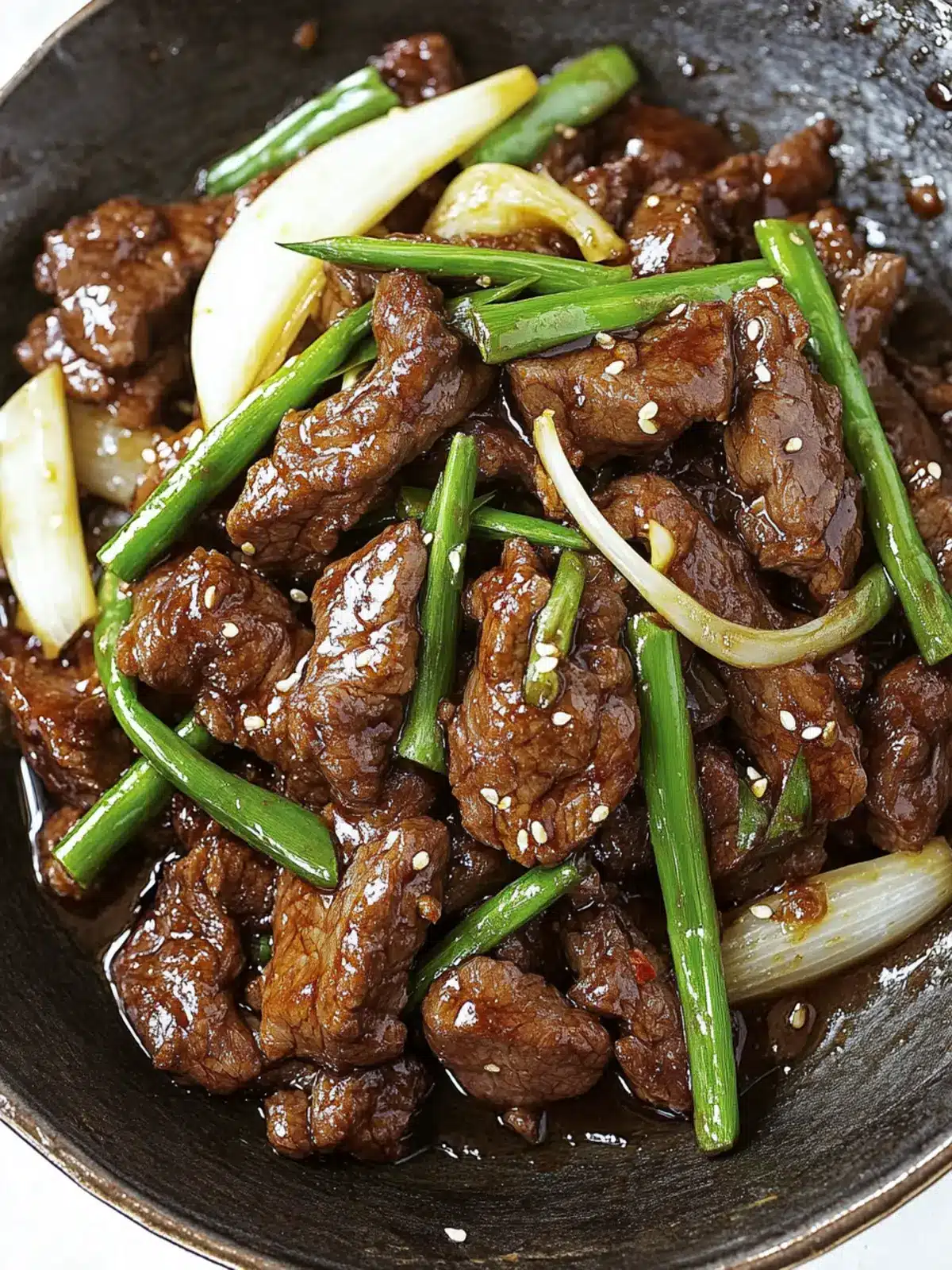
What to Serve with Mongolian Beef?
Creating a delightful meal impacts not just the taste but also the experience. Let’s explore some scrumptious accompaniments that will elevate your Mongolian Beef!
-
Steamed Jasmine Rice: Light and fluffy, perfectly absorbs the rich and savory sauce, bringing balance to every bite.
-
Garlic Bok Choy: Sautéed with garlic, this bright and fresh green veggie adds crunch and nutrients, complementing the savory flavors of the beef.
-
Sesame Noodles: These nutty, chilled noodles provide a pleasant contrast to the warm Mongolian Beef, enhancing the meal’s overall texture.
-
Crispy Spring Rolls: Light and filled with veggies, these add an extra crunch to your plate and are perfect for scooping up any leftover sauce.
-
Chili Garlic Edamame: These bite-sized pods offer a spicy kick that pairs beautifully with the sweet and savory notes of the beef.
-
Sweet and Sour Cucumber Salad: Refreshing and tangy, this salad cuts through the richness of the dish and cleanses the palate between bites.
-
Chardonnay or Riesling: These wines complement the dish’s flavors perfectly; their acidity pairs well with the savory sweetness, enhancing your dining experience.
With these accompaniments, your meal is sure to be a memorable feast that everyone at the table will love!
Expert Tips for Mongolian Beef
Marinating Magic: Ensure your flank steak is thinly sliced for maximum tenderness; marinate for at least 15 minutes to let the flavors develop.
Don’t Rush the Sear: Heat your oil properly before adding the beef to prevent sticking and achieve that beautiful golden crust without steaming the meat.
Veggie Variations: Feel free to add bell peppers or broccoli for extra color and nutrition, but don’t overcrowd the pan to avoid steaming.
Perfecting the Sauce: Adjust the sugar and soy sauce to balance sweetness and saltiness according to your taste preferences; just a little tweak can make a big difference!
Serving Suggestions: Serve your Mongolian beef over rice or noodles for a complete meal, and don’t forget to sprinkle some sesame seeds on top for added crunch!
Avoid Overcooking: Keep an eye on the cooking time to prevent overcooking the beef; it should be tender and juicy, perfectly balanced with the savory sauce.
How to Store and Freeze Mongolian Beef
Fridge: Store leftover Mongolian beef in an airtight container for up to 3 days. Reheat gently on the stove or microwave to maintain tenderness.
Freezer: For longer storage, freeze the beef in a freezer-safe container for up to 2 months. Thaw in the fridge overnight before reheating.
Reheating: To revive the flavors, reheat in a skillet over medium heat, adding a splash of water or soy sauce if needed to prevent drying out.
Portioning: Consider dividing leftovers into single servings before freezing for effortless meal options during busy days!
Mongolian Beef Variations
Feel free to bring your personal touch to this dish, making it a delight for every palate.
- Dairy-Free: Use coconut aminos instead of soy sauce for a flavorful alternative that’s also gluten-free.
- Spicy Kick: Add sliced jalapeños or a dash of sriracha while cooking for that extra heat and excitement! Just remember, spice levels can be adjusted—start small and build up to your taste.
- Vegetarian: Substitute beef with tofu or tempeh, marinating the same way for a plant-based version that’s equally satisfying. Press the tofu beforehand to remove excess moisture, ensuring it absorbs the flavors well.
- Extra Veggies: Toss in colorful bell peppers, snap peas, or broccoli during the stir-frying stages for a nutritious and vibrant dish. Not only does this enhance the flavors, but it also adds delightful textures!
- Rice Options: Serve over cauliflower rice or quinoa for a low-carb option that doesn’t compromise on taste, keeping the dish hearty and wholesome.
- Sweet Swap: For a different flavor profile, use honey or maple syrup instead of granulated sugar for a natural sweetness that pairs beautifully! Just note that honey may slightly alter the color and texture of the sauce.
- Noodle Alternatives: Instead of rice vermicelli, try using zoodles (zucchini noodles) or whole-grain pasta to experiment while keeping it deliciously satisfying. The zucchini adds a lovely freshness, turning your dish into a light meal option!
- Umami Boost: Stir in a tablespoon of hoisin sauce along with the sugar and soy sauce for a deeper flavor experience that truly elevates your Mongolian beef. It’s a simple addition that brings a rich, savory note, making it even more appetizing!
Make Ahead Options
These Mongolian Beef preparations are ideal for busy home cooks looking to save time during the week! You can marinate the flank steak for up to 24 hours in advance, allowing the flavors to deeply penetrate the meat. Simply mix together the water, Shaoxing rice wine, salt, baking soda, cornstarch, and oil, and add the steak. Store it in an airtight container in the fridge. The cooked beef can also be refrigerated for up to 3 days; just be sure to reheat it gently in a pan to maintain that tender texture. When you’re ready to serve, quickly sauté the garlic and onions before returning the marinated beef to the skillet. You’ll have a delicious, home-cooked Mongolian Beef on the table with minimal effort!
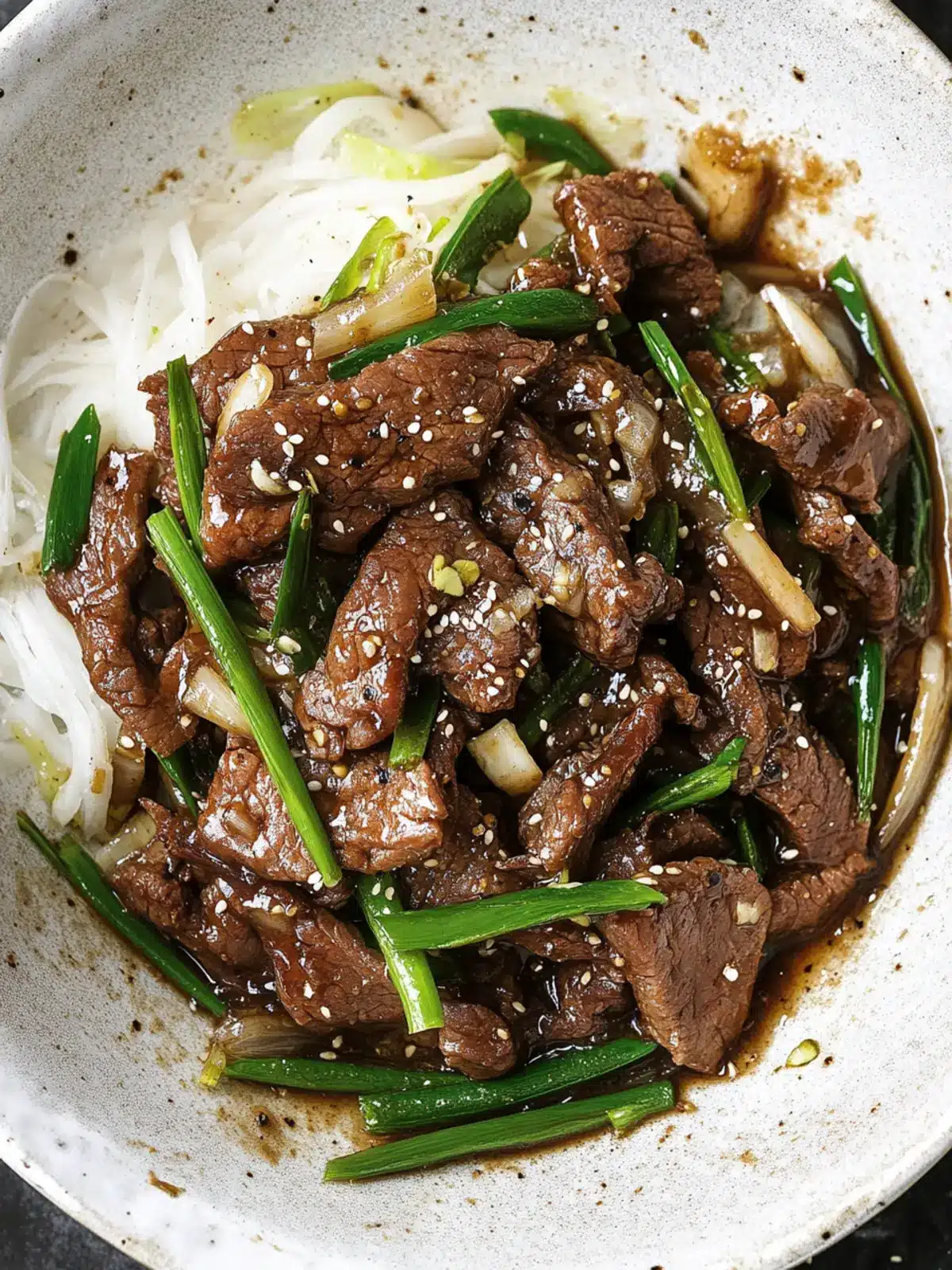
Mongolian Beef Recipe FAQs
How do I choose the best flank steak for Mongolian Beef?
Absolutely! Look for flank steak with a bright red color and a bit of marbling to ensure flavor and tenderness. Avoid cuts that have dark spots all over or seem overly dry. If you can, ask the butcher for freshly cut steaks for the best results!
What’s the best way to store leftovers from my Mongolian Beef?
Very easy! Store leftover Mongolian beef in an airtight container in the refrigerator for up to 3 days. When reheating, do so gently over medium heat on the stove or in the microwave to maintain that wonderful tenderness.
Can I freeze Mongolian Beef?
Yes, you can! For freezing, place your Mongolian beef in a freezer-safe container or vacuum seal it. It should keep well for up to 2 months. When you’re ready to enjoy it again, thaw it overnight in the fridge, and reheat gently in a skillet for a delicious recovery.
What should I do if my beef turns out tough?
If your beef is tough, it might be due to overcooking or not slicing against the grain. For future reference, always slice flank steak thinly against the grain, and sear quickly on high heat to keep the meat tender. If you happen to overcook, try adding a splash of broth or water when reheating to help tenderize it!
Are there any dietary considerations I should be aware of?
Absolutely! This recipe contains soy sauce, which is not gluten-free. For gluten-free options, use tamari instead of regular soy sauce. Always double-check ingredient labels to ensure no hidden allergens, especially for those with gluten intolerance or soy allergies.
How can I enhance the flavor without adding more sugar?
Very easily! Consider incorporating additional aromatics like ginger or a splash of rice vinegar to deepen the flavor profile. You can also balance out sweetness with extra black pepper or chili flakes for a kick, just to keep things exciting!
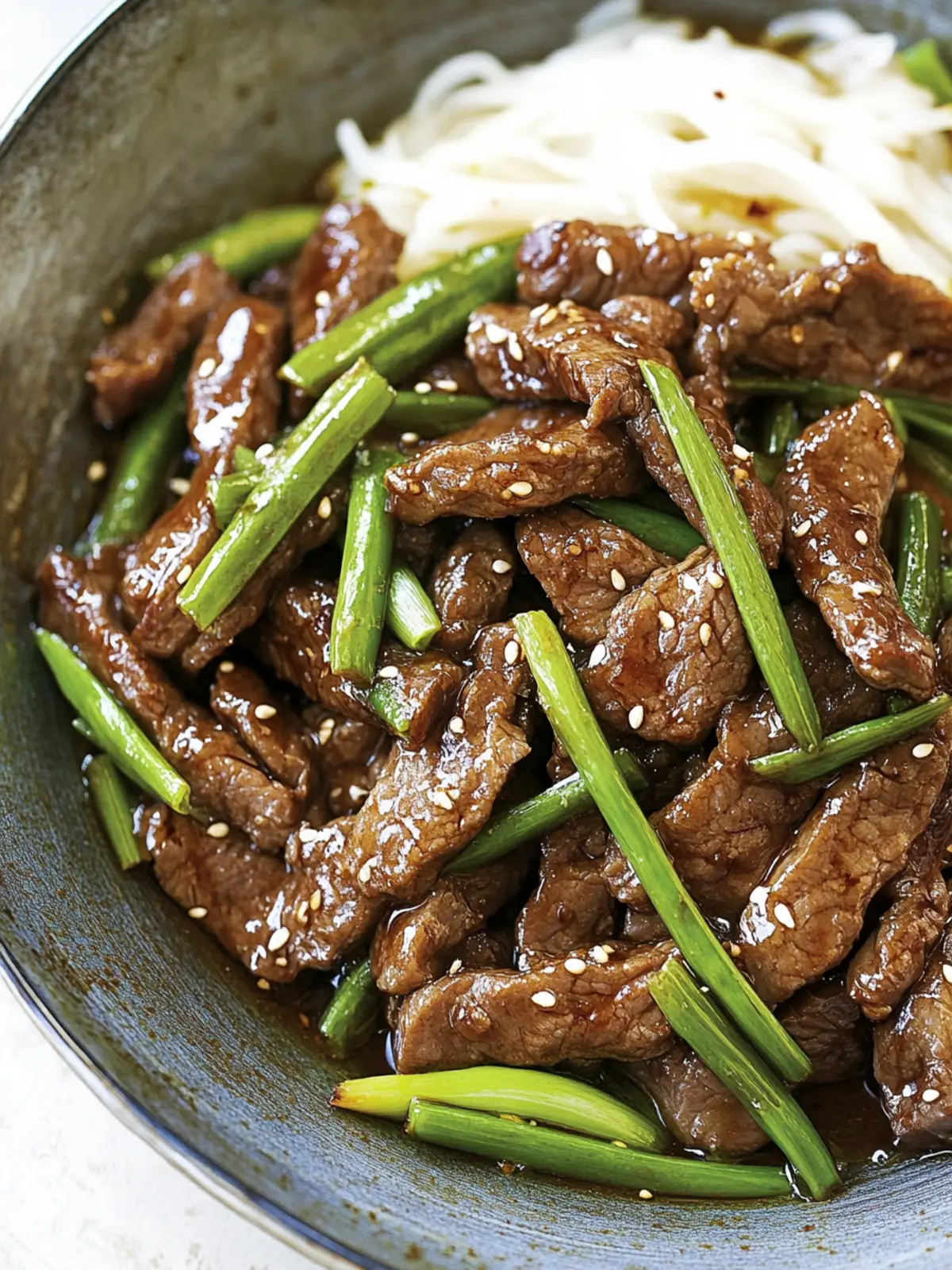
Savory Mongolian Beef: A Flavorful Home-Cooked Delight
Ingredients
Equipment
Method
- In a mixing bowl, combine your thinly sliced flank steak, water, Shaoxing rice wine, salt, and baking soda. Mix vigorously until the beef absorbs most of the liquid, ensuring it’s fully coated.
- Once the beef has soaked up the liquid, add the cornstarch and mix until everything is evenly coated. Stir in the oil and let the mixture set aside to marinate for about 10 to 15 minutes—or for best results, refrigerate overnight.
- If you’re using rice vermicelli, heat 1 to 2 inches of oil in a wok or pan until hot. Fry the dry rice noodles for 30 seconds to 1 minute until they puff up. Remove and drain on paper towels.
- In the same wok or sauté pan, add just enough oil to coat the bottom and heat it on medium to medium-high temperature.
- When the oil is hot, add the marinated beef to the pan. Sear the beef on both sides until it’s just cooked through and golden brown. Remove the beef and set it aside.
- In the same pan, leave about 1 to 2 tablespoons of the oil. Add the minced garlic and stir fry until fragrant—this should take about 15 to 30 seconds.
- Toss in the sliced onions and the white parts of the green onions. Stir fry these until the onions are just starting to turn translucent, adding a lovely sweetness to your dish.
- Return the beef to the pan with the cracked black pepper. Briefly stir fry before drizzling the Shaoxing cooking wine around the pan. Continue stirring for 30 seconds to 1 minute until fragrant.
- Stir in the sugar and soy sauce, mixing until the beef is well coated and actually begins to smell charred and caramelized—it’s going to be delicious!
- Finally, add the green parts of the green onions and sauté briefly to combine everything harmoniously.
- Serve your savory Mongolian beef over the prepared fried rice noodles, and watch everyone gather around to enjoy!