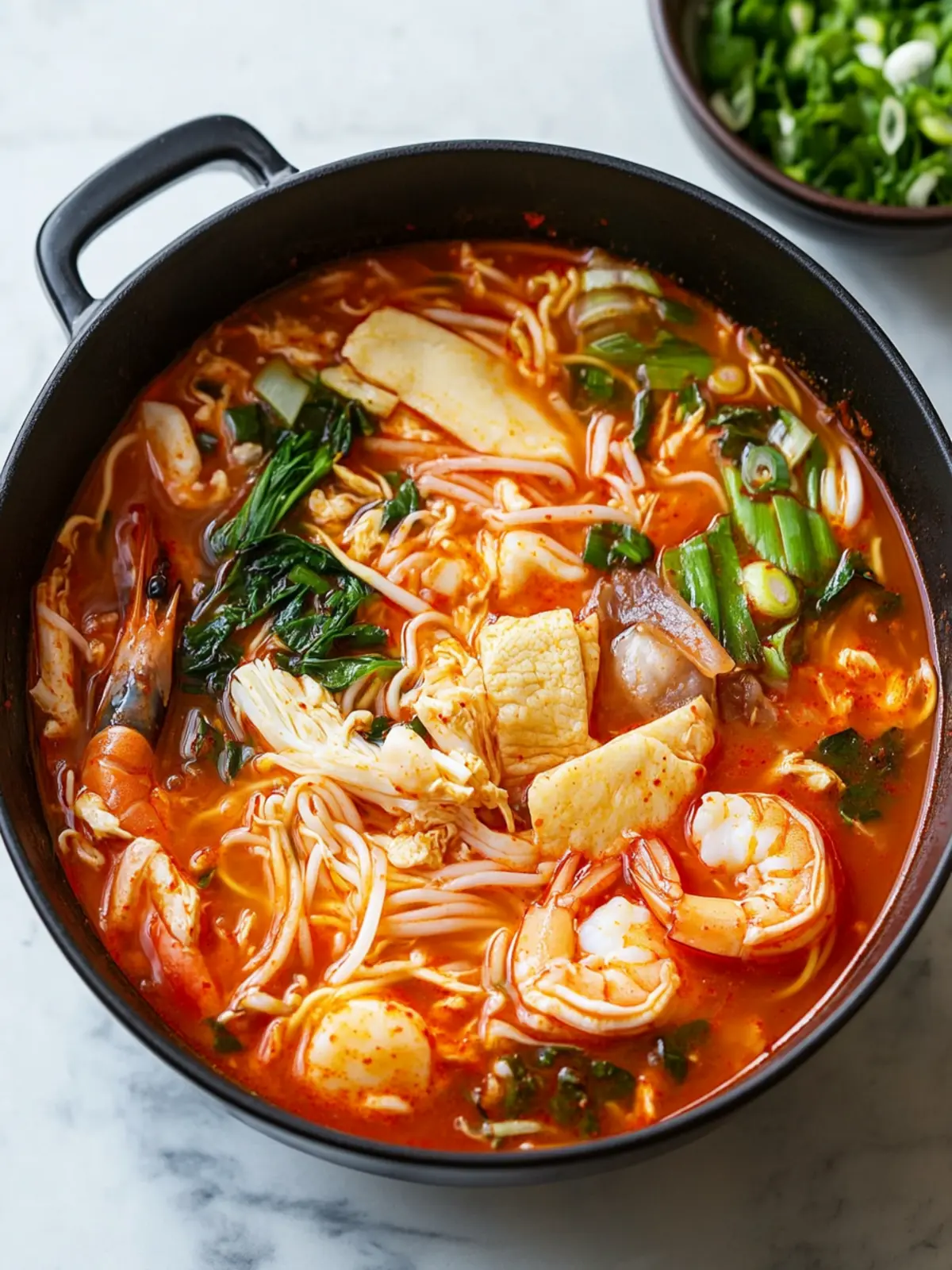
There’s something exhilarating about the vibrant colors and captivating scents that emanate from a pot of Jjamppong (Korean Seafood Noodle Soup) simmering on the stove. The first time I took a slurp of this spicy, nourishing soup, it was like a delicious journey to the bustling streets of Busan, where warm bowls of seafood goodness are a daily delight. Picture the savory notes of garlic mingling with the briny freshness of shrimp, clams, and squid—a harmony that dances on your palate.
As the weather cools and seasonal cravings shift from light salads to heartwarming dinners, this recipe shines brightly. Whether you’re looking to impress dinner guests or simply escape the monotony of takeout, Jjamppong is incredibly versatile, bringing a kick of flavor that satisfies every time. Plus, it’s a delightful way to incorporate an array of seafood and vibrant vegetables into your weeknight routine! So grab your apron; let’s dive into the world of bold flavors with this easy-to-follow recipe that’s sure to become a family favorite.
Why is Jjamppong a Must-Try Recipe?
Rich flavors abound in this satisfying bowl, with the spicy kick of gochujang and fresh seafood creating an unforgettable taste experience. Quick to prepare, Jjamppong is perfect for busy weeknights or when entertaining guests, dazzling them with minimal effort. Healthy and hearty, loaded with vibrant vegetables and protein, it fits into any balanced diet while bringing a burst of freshness to your table. Plus, comforting warmth from the broth makes it an ideal dish for cozy nights in. Transform your cooking routine and enjoy this delightful soup that’s sure to impress!
Jjamppong Ingredients
Unlock the secret to authentic Korean Seafood Noodle Soup with these essential ingredients.
For the Noodles
- Korean fresh noodles – These create the perfect chewy texture that complements the soup.
For the Seafood
- Medium-sized shrimp (10-12) – Fresh shrimp add a sweet and succulent flavor to the dish.
- Manila clams – They provide a delightful briny taste that enhances the overall umami profile.
- Squid – Cut into rings for a tender, seafood bite that balances well with the other ingredients.
- Bay scallops or sea scallops – Their sweet flavor brings a luxurious touch to the soup.
For the Broth and Seasoning
- Gojujang (Korean chili paste) – This spicy element adds depth and richness to your Jjamppong.
- Gochugaru (Korean chili powder) – Sprinkle this in for an additional kick of heat and lovely color.
- Chicken broth or bone broth – A good quality broth is key for a flavorful base that ties all the ingredients together.
- Soy sauce – Use it to taste, enhancing the savory notes in your soup.
- Salt – Adjust according to your taste preference.
For the Vegetables
- Napa cabbage – Its tender leaves soak up the delicious broth while adding a nice crunch.
- Bok choy – This leafy green brings a fresh, peppery flavor to the mix.
- Scallions – Cut into strips for a fresh, aromatic garnish that brightens the dish.
Now you have everything you need to create a comforting bowl of Jjamppong, bursting with flavor and warmth!
How to Make Jjamppong
-
Cook the fresh noodles according to the package instructions until they are al dente, which should take just a few minutes. Drain them and set aside; remember, they don’t need to be fully cooked yet!
-
Heat a pot over high heat and add the cooking oil. Once hot, toss in the minced garlic and onion, stir-frying until they become aromatic and translucent, about 2-3 minutes.
-
Add the shrimp, Manila clams, squid, scallops, gochujang, and gochugaru. Stir everything together well, allowing the seafood to soak up those fantastic flavors for about 2 minutes.
-
Pour in the chicken broth, and then add the napa cabbage and bok choy. Bring the soup to a quick boil, watching for a beautiful bubbling simmer.
-
Season with soy sauce and salt to taste. Gently stir in the pre-cooked noodles and cook for just 30 seconds until they are warmed through.
-
Finish by stirring in the scallions. Turn off the heat and ladle the soup into bowls, ready to serve immediately and enjoy!
Optional: Garnish with extra scallions for a fresh, vibrant touch.
Exact quantities are listed in the recipe card below.
Jjamppong Variations & Substitutions
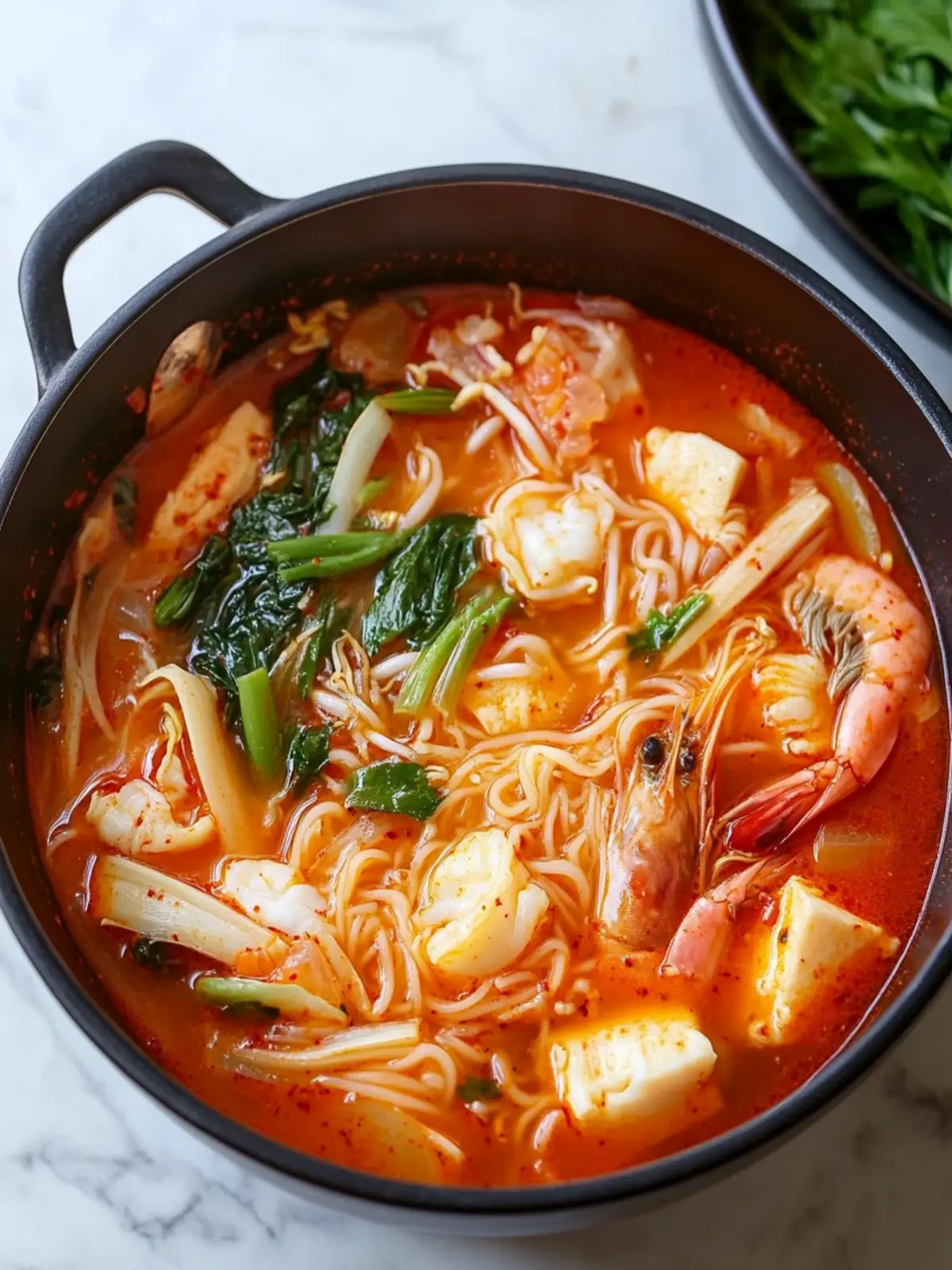
Get ready to reinvent your Jjamppong! This warm, spicy noodle soup is a canvas for your culinary creativity.
-
Dairy-Free: Substitute chicken broth with vegetable broth to keep it light, and skip any dairy products for a soothing, creamy texture without the milk.
-
Spicy Kick: Add sliced jalapeños or fresh Thai chili peppers for an extra blast of heat. This will elevate the flavor, making it a thrilling experience for spice lovers.
-
Gluten-Free: Swap Korean noodles for rice noodles or a gluten-free noodle option. You’ll still capture the delightful essence of the dish without any gluten.
-
Vegetarian Delight: Use tofu or tempeh as your protein instead of seafood, along with a mix of hearty mushrooms. This twist creates a different but just as satisfying bowl of goodness.
-
Flavor Boost: Incorporate a splash of sesame oil at the end for a nutty aroma that rounds out the flavors beautifully. Just remember, a little goes a long way!
-
Texture Twist: Add crunchy vegetables like carrots, radishes, or snap peas for an exciting texture contrast amidst the tender seafood and noodles. This addition brings color and freshness to your meal.
-
Broth Variations: Experiment with miso paste or coconut milk added to the broth for a different depth of flavor that perfectly complements the seafood. A simple change that transforms the traditional soup!
-
Umami Enhancer: Toss in a tablespoon of fish sauce or an extra dose of soy sauce for an umami explosion that enhances every spoonful. This subtle addition packs a punch!
What to Serve with Jjamppong?
Create the perfect dining experience alongside this vibrant, spicy soup that warms your heart and soul.
- Steamed Rice: A fluffy bowl of rice helps soak up the flavorful broth, providing a satisfying balance to the spicy seafood.
- Kimchi: The tangy crunch of kimchi adds a delightful contrast and enhances the umami flavors already in your soup.
- Korean Pancakes: Light, savory pajeon (Korean pancakes) offer a crispy texture that pairs beautifully with the warm soup, turning your meal into a feast.
- Stir-Fried Vegetables: A colorful medley of sautéed seasonal vegetables brings an extra layer of freshness and nutrition that complements the seafood.
- Pickled Radish Salad: The crisp and zingy notes of pickled radish brighten the palate, cutting through the richness of the soup effortlessly.
- Chilled Soju: For the adults, a glass of chilled soju offers a smooth pairing that rounds out an authentic Korean dining experience.
- Green Tea: A warm cup of green tea provides a soothing finish after this flavorful meal, helping to cleanse the palate beautifully.
- Mochi Ice Cream: For dessert, the sweet and chewy mochi ice cream pairs well, adding a fun and delightful end to your culinary journey.
- Sesame Cracker Bites: These light and crunchy treats can serve as a fun appetizer, balancing the soup’s spicy and soft textures.
- Cucumber Salad: A refreshing cucumber salad with a zingy dressing brings a crisp contrast that complements the warming soup perfectly.
Expert Tips for Jjamppong
• Noodle Texture: Make sure to cook the Korean fresh noodles al dente so they maintain their perfect chewy texture when added to the soup.
• Fresh Ingredients: Always opt for the freshest seafood available; this enhances the overall flavor of your Jjamppong without overwhelming the dish.
• Adjust Spice Level: If you’re not a fan of too much heat, reduce the amount of gochujang and gochugaru. Taste as you go for your perfect balance!
• Don’t Overcook Seafood: Keep an eye on the cooking time for seafood; they only need a couple of minutes to ensure tenderness and avoid a rubbery texture.
• Broth Base: Using a high-quality chicken or bone broth makes a big difference in flavor; homemade broth is even better if you have it on hand!
• Customize Vegetables: Feel free to mix in other seasonal vegetables according to your preference; this Jjamppong recipe is wonderfully versatile!
Make Ahead Options
These delightful bowls of Jjamppong (Korean Seafood Noodle Soup) are perfect for meal prep lovers! You can prepare the broth, seafood, and vegetables up to 3 days in advance. Simply follow the cooking instructions until you add the noodles, then cool the soup and refrigerate it (this helps maintain the freshness of the seafood). When you’re ready to enjoy, just reheat the soup on the stove, add the pre-cooked noodles, and cook for 30 seconds to warm through. This way, you’ll have a deliciously satisfying meal with minimal effort on busy weeknights, ensuring restaurant-quality results right at home!
How to Store and Freeze Jjamppong
Fridge: Keep leftover Jjamppong in an airtight container for up to 3 days. Make sure to cool it completely before sealing for best preservation.
Freezer: If you want to freeze it, portion the soup into freezer-safe bags or containers without noodles, and it can last for up to 3 months.
Reheating: To enjoy your frozen Jjamppong, thaw it overnight in the fridge, then heat on the stove until warmed through. Add freshly cooked noodles for the best texture.
Noodles: For leftover noodles, store them separately in the fridge and use within 2 days to prevent them from becoming soggy.
Jjamppong Recipe FAQs
What type of noodles should I use for Jjamppong?
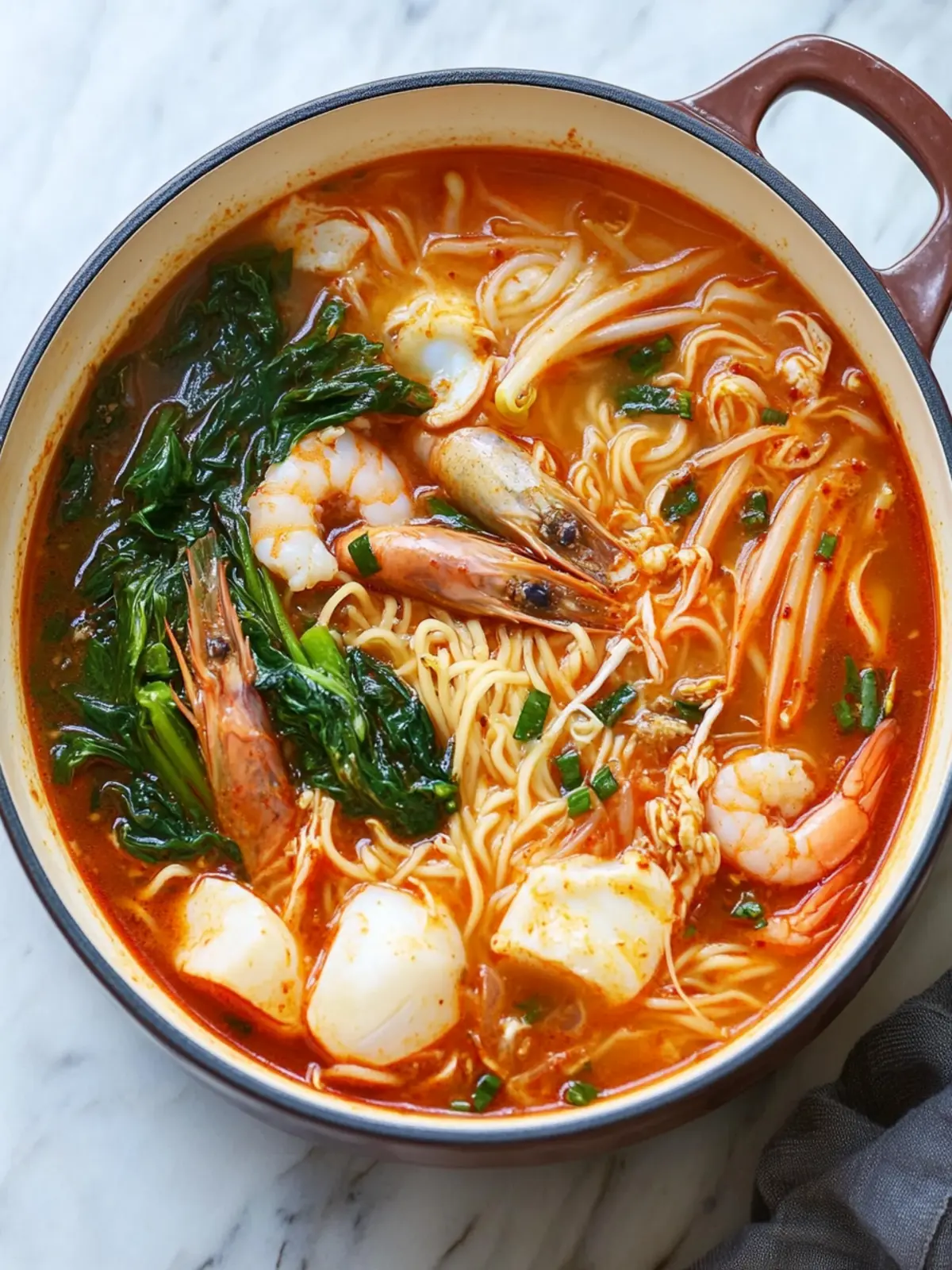
You should use Korean fresh noodles, which provide a delightful chewy texture that complements the soup beautifully. If you can’t find Korean fresh noodles, you can substitute with other types of noodles, but the best texture is achieved with the original.
How long can I store Jjamppong in the fridge?
You can keep leftover Jjamppong in an airtight container for up to 3 days. Make sure to cool it completely before sealing to ensure optimum freshness and flavor.
Can I freeze Jjamppong?
Absolutely! To freeze Jjamppong, portion the soup into freezer-safe bags or containers without the noodles. It can last for up to 3 months. When you’re ready to enjoy it, thaw overnight in the fridge, then heat it on the stove until warmed through and add freshly cooked noodles for that perfect texture.
How can I ensure the seafood in Jjamppong is tender?
To achieve tender seafood, keep an eye on cooking times. The seafood only needs a couple of minutes to cook, so add it early in the cooking process and turn off the heat as soon as it’s just cooked through. This prevents the seafood from becoming rubbery and tough, ensuring that every bite is tender and delicious!
Is Jjamppong safe for someone with seafood allergies?
No, Jjamppong contains various types of seafood such as shrimp, clams, and squid, making it unsafe for individuals with seafood allergies. If you’re looking for a similar dish without seafood, consider substituting the seafood with tofu or vegetables for a delicious vegetarian option that maintains the soup’s flavor profile.
How can I adjust the spiciness level in Jjamppong?
If you prefer a milder dish, simply reduce the amount of gochujang and gochugaru used in the recipe. Start with half the recommended amount and taste as you go to find your ideal spice balance while still enjoying the rich and complex flavors that Jjamppong offers.
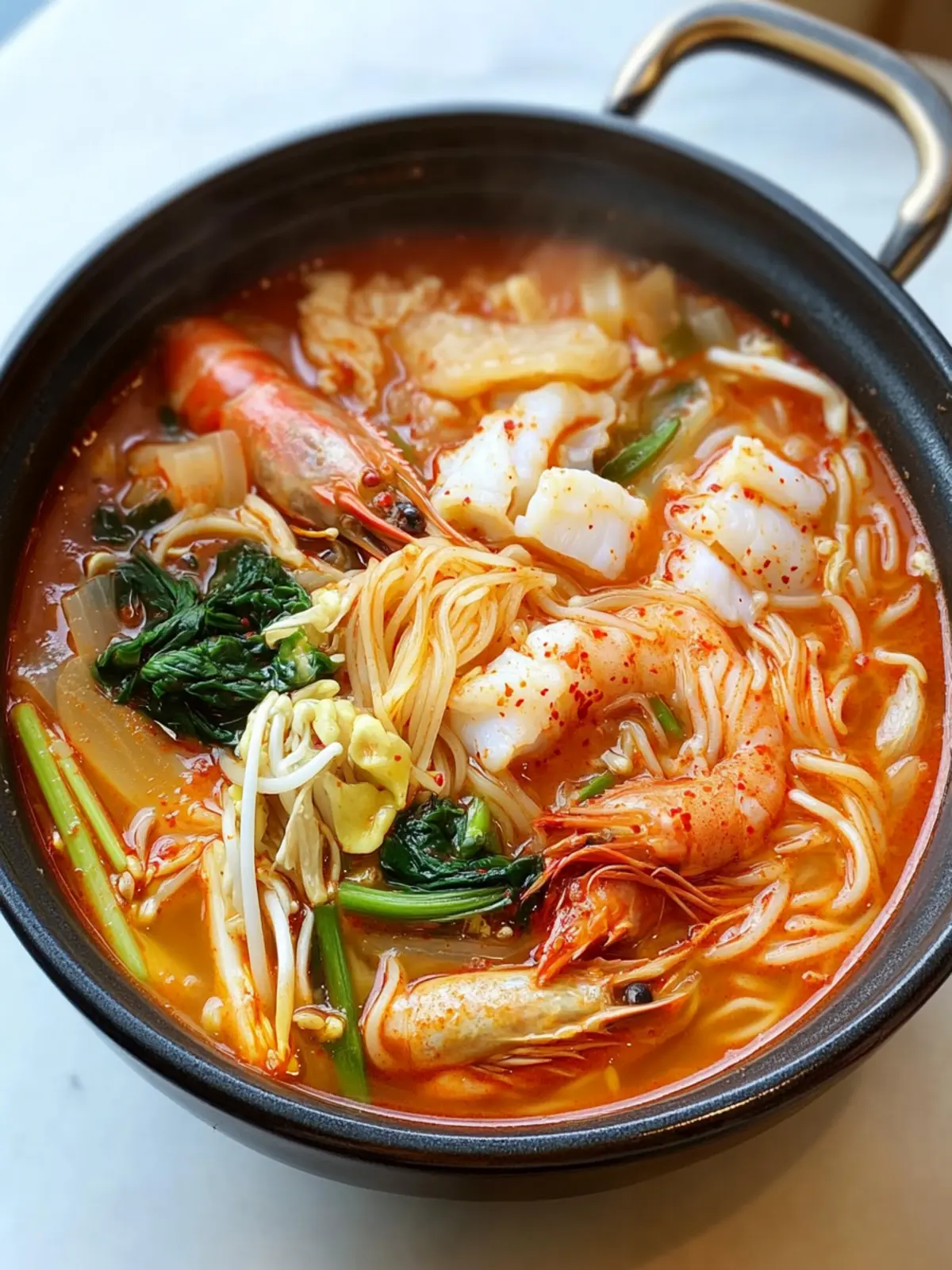
Jjamppong: Brighten Your Day with Spicy Seafood Noodle Soup
Ingredients
Equipment
Method
- Cook the fresh noodles according to the package instructions until they are al dente, then drain and set aside.
- Heat a pot over high heat and add cooking oil. Once hot, toss in minced garlic and onion, stir-frying until aromatic and translucent, about 2-3 minutes.
- Add shrimp, Manila clams, squid, scallops, gochujang, and gochugaru. Stir well, allowing seafood to soak up the flavors for 2 minutes.
- Pour in chicken broth, and then add napa cabbage and bok choy. Bring the soup to a boil.
- Season with soy sauce and salt to taste. Gently stir in the pre-cooked noodles and cook for 30 seconds until warmed through.
- Finish by stirring in the scallions. Ladle the soup into bowls and serve immediately.