
As the sun begins to set, casting a warm golden hue across my kitchen, the enticing aroma of sautéed garlic and tender steak fills the air. This is when I know it’s time to whip up a batch of Japchae, the beloved Korean stir-fried glass noodles that seamlessly blend rich flavors with vibrant textures. A plate of Japchae brings back memories of cozy family gatherings, where everyone shares stories and laughter, all while savoring each delicious bite.
I discovered this dish during a chance encounter with a Korean street vendor while traveling. I was captivated by the colorful display and the cheerful bustle around his stall. Little did I know, I would be recreating that same magic in my own kitchen, turning everyday ingredients into a gourmet meal that impresses at dinner parties or adds a delightful twist to weekday lunches.
With its combination of thinly sliced ribeye, earthy mushrooms, and crisp vegetables enveloped in a sweet and savory soy-based sauce, this is a dish that will transport your taste buds. Whether you’re a seasoned chef or a home cook exploring new culinary delights, this Japchae recipe is sure to elevate your dinner routine and bring a taste of Korea into your home. Get ready to enjoy this easy, crowd-pleasing favorite!
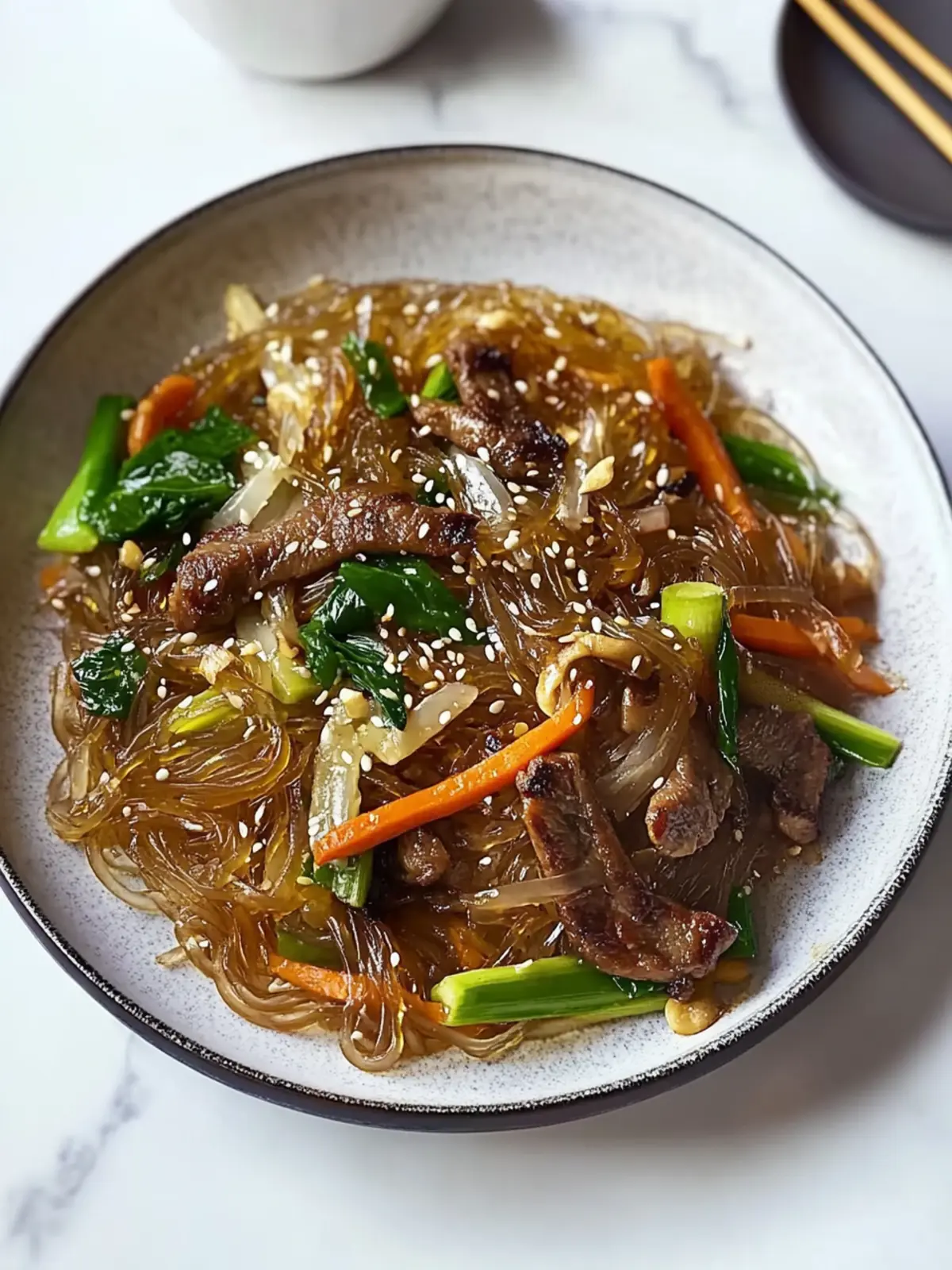
Why is Japchae a Must-Try Dish?
Unique flavors blend harmoniously, with tender rib eye steak complementing sautéed vegetables and earthy mushrooms. Quick cooking means you can have a gourmet meal on the table in no time. Versatile enough to serve as a delightful side or a stand-alone dish, it adapts to any occasion. Crowd-pleaser vibes ensure everyone at your table will be asking for seconds. Try this recipe for a memorable twist on your weeknight dinners!
Japchae Ingredients
• Gather these essentials for a delicious Japchae!
For the Steak Marinade
• Boneless rib eye steak – thinly sliced for optimal absorption of flavors.
• Soy sauce – essential for that savory depth; use low-sodium if preferred.
• Light brown sugar – adds a touch of sweetness to balance the savory notes.
• Toasted sesame oil – provides a nutty aroma and richness.
• Garlic – fresh minced garlic gives a zesty kick to the marinade.
For the Noodles
• Korean sweet potato noodles or mung bean noodles – the star of Japchae, providing a chewy texture.
• Kosher salt – enhances the overall flavor; adjust to your taste.
For the Vegetables
• Fresh baby spinach – adds vibrant color and nutrition; wilt it for a tender bite.
• Carrots – julienne-cut for a sweet crunch; they cook quickly and add color.
• Scallion bottoms – sliced for a mild onion flavor that complements the dish.
• Scallion tops – sliced for a pop of green freshness.
• Shiitake mushrooms – thinly sliced for an earthy flavor that enriches the dish.
For Cooking
• Canola oil – high smoke point oil perfect for sautéing.
• Roasted sesame seeds (optional) – for a delightful crunch and added presentation.
Unleash the magic of Japchae with these simple yet flavorful ingredients, and prepare for an unforgettable dining experience!
How to Make Japchae
-
Marinate the Steak: Place the thinly sliced rib eye steak in a small bowl. Add 1 1/2 tablespoons of soy sauce, 1 1/2 teaspoons of brown sugar, 1 1/2 teaspoons of sesame oil, and 1 teaspoon of minced garlic. Massage the seasonings into the meat and let it sit at room temperature until ready to cook, allowing the flavors to meld beautifully.
-
Blanch the Spinach: Bring a Dutch oven filled with water to a boil. Gently place a strainer basket in the water and add the fresh spinach; cook for about 30 seconds to 1 minute until just wilted. Once done, drain the spinach, rinse with cold water until cool, and squeeze to remove excess liquid. In a small bowl, combine with 1 teaspoon sesame oil, 1/4 teaspoon salt, and the remaining minced garlic; stir well.
-
Cook the Noodles: Return the water to a boil and add the noodles. Cook until al dente, approximately 6 to 7 minutes. Drain and rinse with cold water, then snip the noodles a few times with kitchen shears to make them easier to incorporate. In a large bowl, mix in the remaining soy sauce, brown sugar, sesame oil, and salt, tossing well to combine.
-
Sauté the Vegetables: Heat the Dutch oven over medium-high heat and add 1 tablespoon of canola oil, swirling to coat. Toss in the carrots and scallion bottoms, sautéing for about 2 minutes while stirring often. Add the scallion tops and an additional 1/4 teaspoon salt; cook, stirring constantly, for another minute. Remove the mixture from the pan.
-
Cook the Mushrooms: In the same Dutch oven, add another tablespoon of canola oil and swirl to coat over medium-high heat. Add the sliced shiitake mushrooms and cook them until browned and tender, roughly 3 minutes. Stir in the remaining sesame oil and salt, tossing to coat, then remove the mushrooms from the pan.
-
Combine Everything: Add the final tablespoon of canola oil to the Dutch oven and swirl to coat. Now, add the marinated steak and cook until the liquid evaporates and the steak is beautifully browned, about 4 minutes. Next, return all the vegetable mixtures along with the noodle and spinach mixes. Toss constantly until everything is heated through, around 3 minutes. Serve warm or at room temperature for the best experience!
Optional: Sprinkle with roasted sesame seeds for an extra crunch.
Exact quantities are listed in the recipe card below.
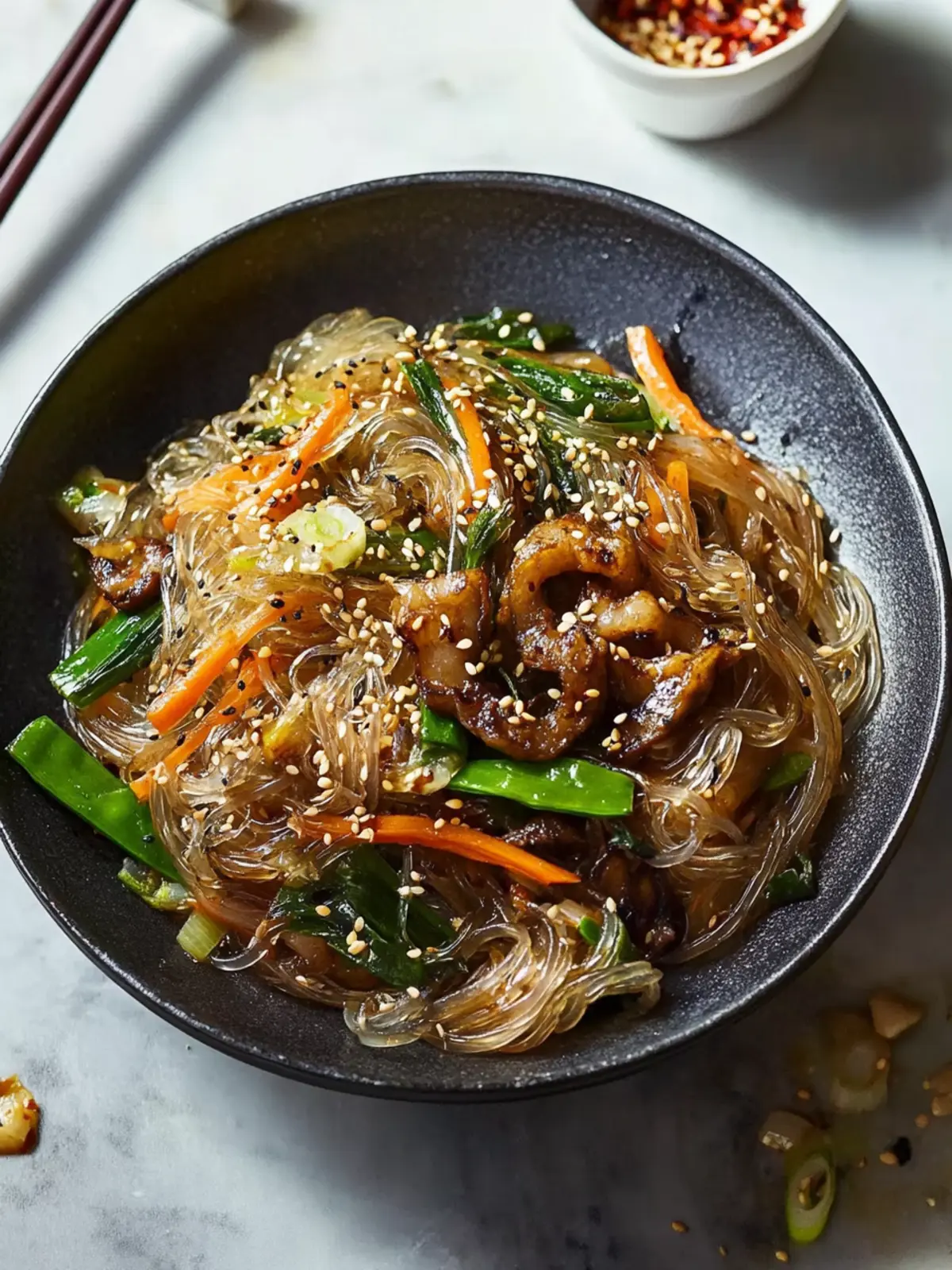
What to Serve with Japchae?
Create a beautiful meal that tantalizes your senses, pairing Japchae with delicious sides and drinks that enhance its rich flavors.
-
Korean BBQ Beef: Juicy, marinated beef complements the sweet and savory notes of Japchae, creating a harmonious blend of flavors and textures.
-
Sesame Cucumber Salad: Crunchy cucumbers dressed in sesame oil and rice vinegar offer a refreshing contrast, balancing the richness of the noodles.
-
Kimchi: This fermented side dish adds a spicy kick and depth, enriching your meal with traditional Korean flavors that perfectly accompany Japchae.
-
Steamed Buns: Soft and pillowy, these buns filled with savory meat or veggies make for a delightful texture contrast, making every bite interesting.
-
Miso Soup: A warm, umami-rich miso soup rounds out your meal, cleansing the palate while embracing the depth of flavors found in Japchae.
-
Green Tea: A light, aromatic tea refreshes your senses, making it a perfect drink to enjoy alongside this savory noodle dish.
-
Chocolate Mochi: Close the dinner with a sweet touch; these chewy treats offer a delicious end that complements Japchae’s savory essence.
Make Ahead Options
These Japchae (Korean Stir-Fried Glass Noodles) are perfect for busy weeknights and can be prepped in advance to save you precious time! You can marinate the ribeye steak and prep the vegetables—julienne the carrots, slice the scallions, and cut the mushrooms—up to 24 hours ahead. Store each component in separate airtight containers in the refrigerator to maintain their freshness. You can also cook the noodles and spinach, letting them cool before refrigerating them in a sealed container. When you’re ready to serve, simply combine all the prepped ingredients in your Dutch oven, sauté until heated through, and enjoy restaurant-quality Japchae with minimal effort!
Storage Tips for Japchae
Fridge: Store leftover Japchae in an airtight container in the fridge for up to 3 days. Reheat on the stovetop with a splash of water to restore moisture.
Freezer: For longer storage, freeze portions of Japchae for up to 2 months. Make sure to use freezer-safe containers to prevent freezer burn.
Reheating: When ready to enjoy, thaw overnight in the fridge and reheat over medium heat, adding a little soy sauce or sesame oil for extra flavor.
Room Temperature: Avoid leaving Japchae out at room temperature for more than 2 hours to ensure food safety and quality.
Expert Tips for Perfect Japchae
- Marinate Smartly: Allow the steak to marinate at room temperature for at least 20 minutes; this enhances the flavor and tenderness, making your japchae truly delicious.
- Avoid Overcooking: Keep an eye on the noodles; overcooking will lead to a mushy texture. Aim for al dente for the perfect bite in your japchae.
- Prep Ingredients Ahead: To streamline the cooking process, chop and prepare all your ingredients beforehand. This ensures everything can be added quickly while cooking, maintaining vibrant flavors.
- Balance Your Sweetness: Adjust the amount of light brown sugar based on your taste preference. A little extra can brighten the savory notes, while too much can overpower the dish.
- Color Variations: Feel free to add other colorful vegetables, such as bell peppers or snap peas, to jazz up your japchae and enhance the nutrition profile.
Japchae Variations & Substitutions
Get creative with yours and discover new flavors that can elevate each bite of this delicious dish!
-
Vegetarian: Swap the rib eye steak for marinated tofu or tempeh for a hearty, plant-based alternative that takes on all the wonderful flavors.
-
Gluten-Free: Use gluten-free soy sauce or tamari instead of regular soy sauce, and choose rice noodles for a delightful texture without the gluten.
-
Spicy Kick: Add gochujang (Korean chili paste) during cooking for a tangy heat that will intrigue your taste buds and bring a fierce flavor burst.
-
Flavorful Broth: Simmer the noodles in a rich mushroom or vegetable broth instead of plain water for an extra layer of flavor that enhances the overall dish.
-
Crunch Factor: Toss in roasted bell peppers or sliced radishes right before serving for a refreshing crunch that elevates the texture profile beautifully.
-
Nutty Goodness: Sprinkle some chopped walnuts or cashews on top before serving for a crunchy contrast and a dose of healthy fats that complements the noodles.
-
Sweet & Savory: Add a touch of sautéed pineapple or mango for a sweet twist; the fruity addition offers a surprising balance with the savory elements.
-
Herby Freshness: Mix in fresh herbs such as cilantro or basil at the end for a burst of freshness that brightens the entire dish and adds a fragrant layer.
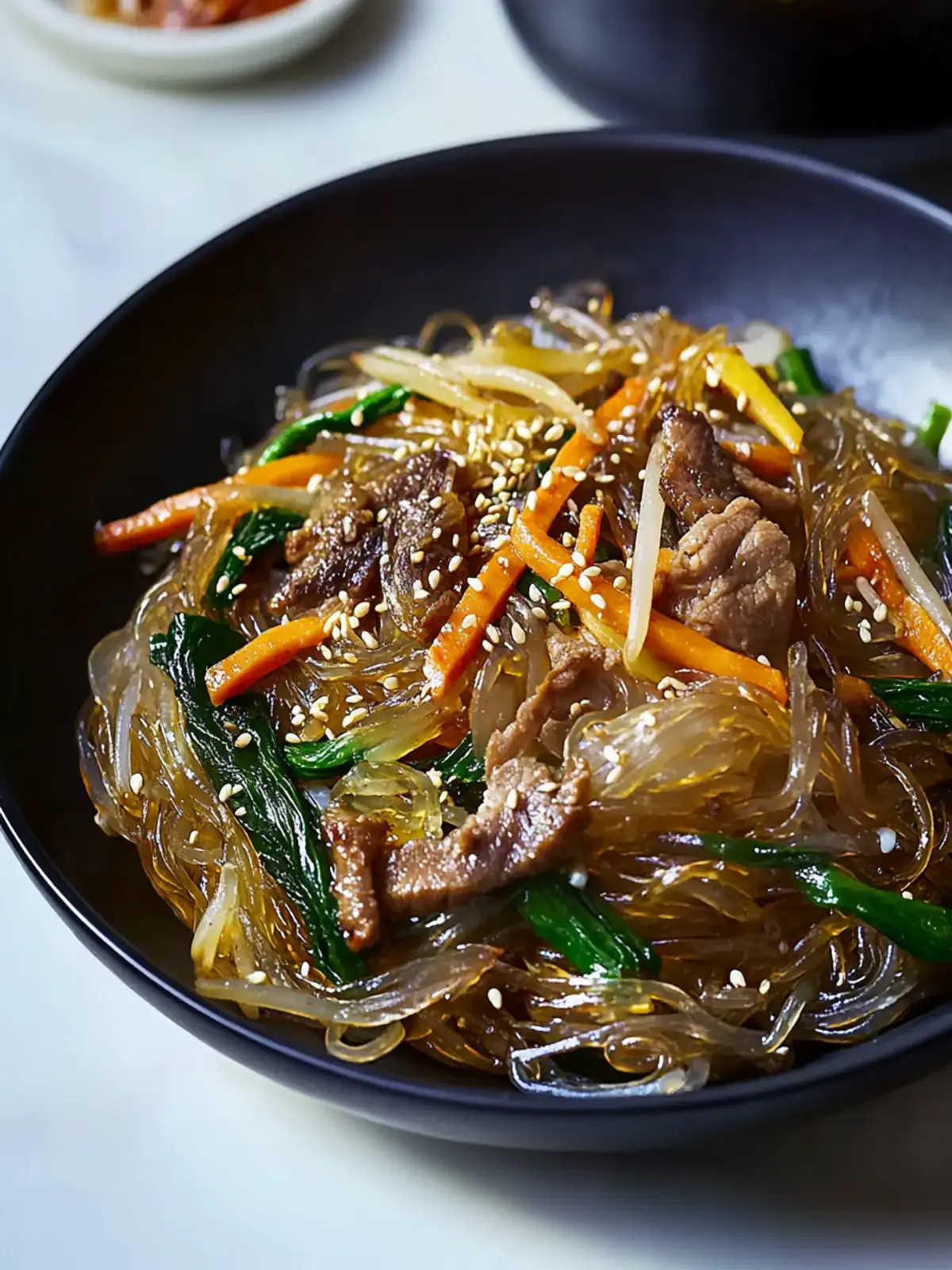
Japchae (Korean Stir-Fried Glass Noodles) Recipe FAQs
What type of steak is best for Japchae?
Absolutely! I recommend using boneless rib eye steak, as its tenderness and flavor really elevate the dish. Thinly sliced rib eye absorbs the marinade beautifully, giving you that melt-in-your-mouth experience. If you can’t find rib eye, you can also use sirloin or flank steak, but make sure to slice them thinly against the grain.
How should I store leftover Japchae?
After enjoying your delicious Japchae, store leftovers in an airtight container in the fridge for up to 3 days. When reheating, simply warm it on the stovetop over medium heat with a splash of water to restore moisture and ensure it doesn’t dry out.
Can I freeze Japchae?
Very! You can comfortably freeze portions of your Japchae for up to 2 months. For best results, place it in freezer-safe containers or heavy-duty freezer bags to prevent freezer burn. When you’re ready to enjoy, thaw it overnight in the fridge before reheating in a pan with a drizzle of soy sauce or sesame oil to bring back the flavors.
What can I do if my noodles become mushy?
Oh no! If this happens, you can try to salvage them by tossing the overcooked noodles into a hot, dry pan for a few minutes. This method will help to evaporate some moisture, making them less soggy. To prevent mushy noodles in the future, always cook them until al dente and rinse them under cold water to stop the cooking process.
Is Japchae suitable for a gluten-free diet?
Yes! For a gluten-free option, look for gluten-free soy sauce or tamari when preparing your Japchae. Also, ensure that your noodles are made from gluten-free ingredients. Many brands offer sweet potato or mung bean noodles that fit the bill perfectly!
How can I make Japchae healthier?
Absolutely! To add even more nutrition, consider incorporating additional vegetables like bell peppers, snap peas, or broccoli. These not only enhance the color and flavor but also increase the dish’s health benefits. Using lean cuts of meat and reducing the sugar content in the marinade are great ways to make this dish lighter while still keeping it delicious.
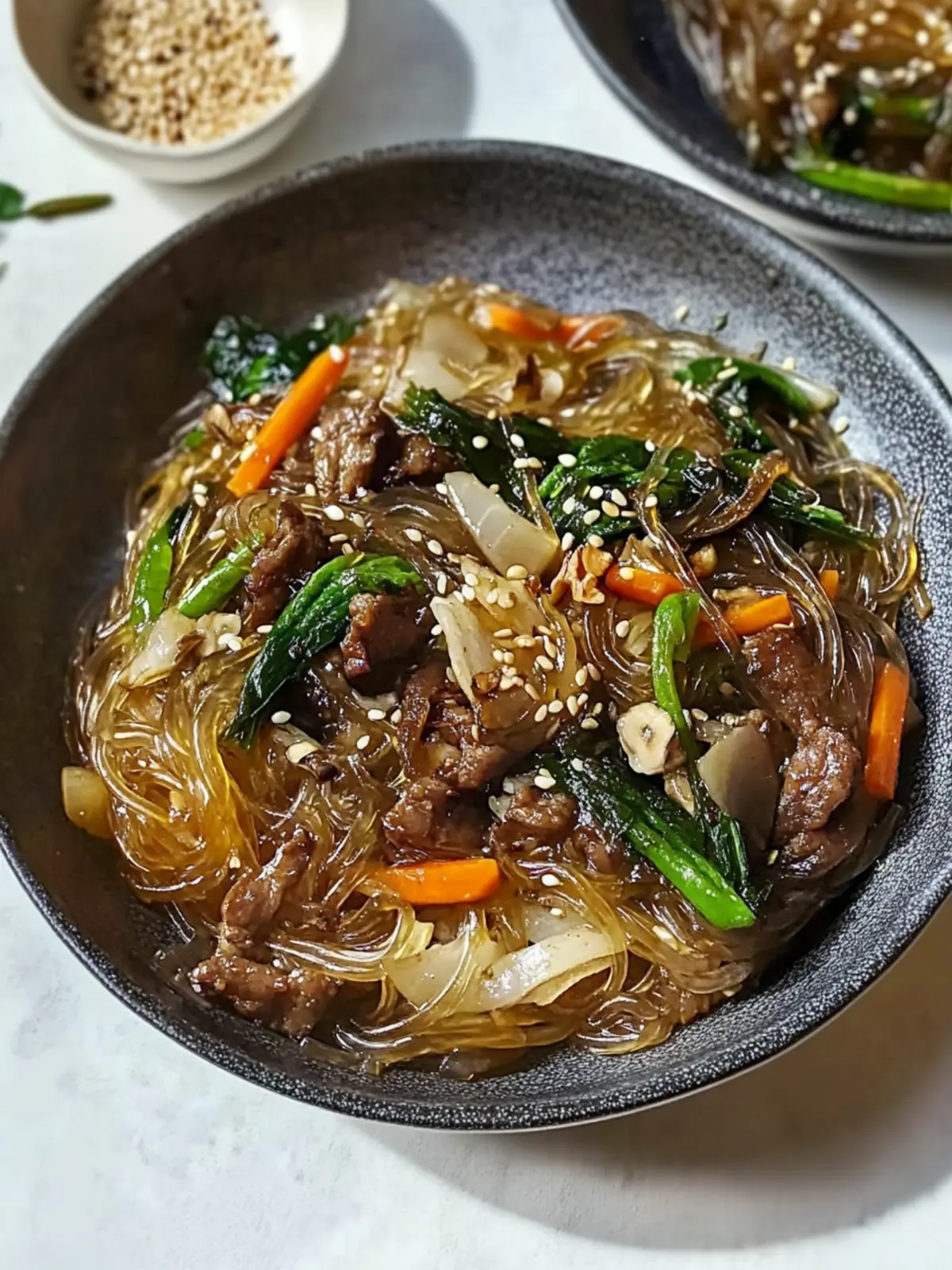
Irresistible Japchae: Savory Korean Stir-Fried Glass Noodles
Ingredients
Equipment
Method
- Marinate the Steak: Place thinly sliced rib eye steak in a bowl. Combine with soy sauce, brown sugar, sesame oil, and minced garlic. Let sit at room temperature.
- Blanch the Spinach: Boil water in a Dutch oven. Add spinach in a strainer; cook until wilted, then rinse and squeeze out water. Combine with sesame oil, salt, and garlic in a bowl.
- Cook the Noodles: Boil water again and add noodles. Cook until al dente (6-7 minutes), drain, rinse, and cut. Mix with remaining soy sauce, brown sugar, sesame oil, and salt.
- Sauté the Vegetables: Heat Dutch oven, add canola oil. Sauté carrots and scallion bottoms for 2 minutes. Add scallion tops and a pinch of salt; cook for another minute. Remove mixture.
- Cook the Mushrooms: In the same pot, add more canola oil and mushrooms. Cook until browned (about 3 minutes). Stir in remaining sesame oil and salt, then remove.
- Combine Everything: Add last tablespoon of canola oil to Dutch oven. Cook marinated steak until browned. Return vegetable, noodle, and spinach mixtures; toss to combine and heat through.