
The vibrant colors of this Thai Coconut Shrimp Curry are enough to lift anyone’s spirits, but it’s the cascade of flavors that truly captivates me. Picture a luscious sauce melding the rich creaminess of coconut milk with the inviting heat of Thai red curry paste. You might find yourself sneaking bites straight from the pot, entranced by the fragrant dance of ginger, garlic, and bright basil wafting through your kitchen.
I discovered this gem on a bustling weeknight, when my craving for takeout clashed with a longing for something homemade. With just a few ingredients and minimal effort, I transformed a simple shrimp dish into an exotic experience that felt like a mini-vacation in my own home. Whether you’re entertaining friends or simply seeking a treat for yourself, this recipe is a passport to flavor town that doesn’t require hours in the kitchen. So grab your apron, and let’s dive into this delicious, fragrant masterpiece!
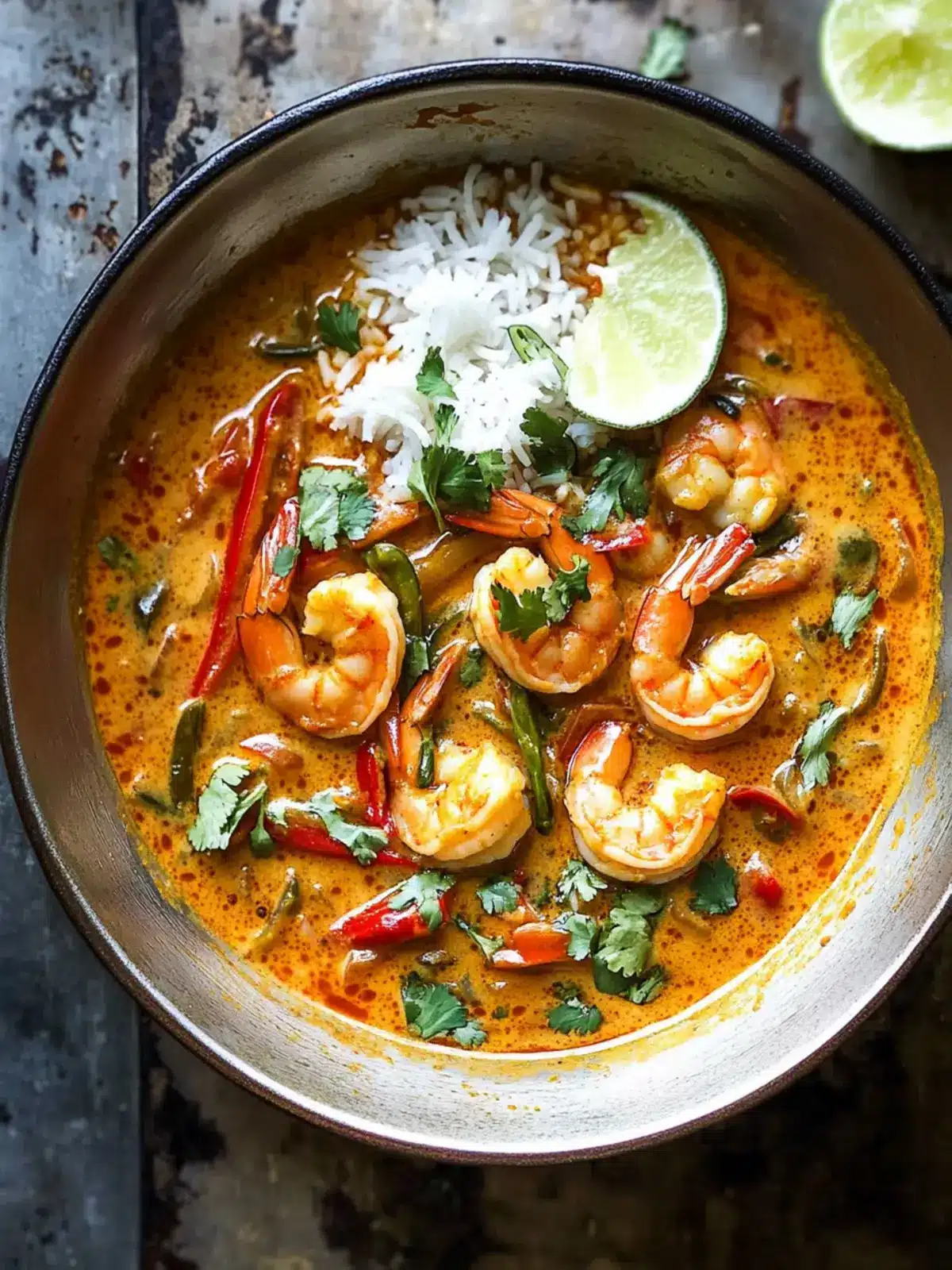
Why is Thai Coconut Shrimp Curry a must-try?
Irresistible Aroma: The captivating scent of ginger and garlic fills your kitchen, making it impossible to resist.
Nutty Creaminess: The silky coconut milk brings a luscious texture to this dish, harmonizing beautifully with the spices.
Satisfying Heat: A subtle kick from the red curry paste ensures a delightful experience for spice lovers.
Ready in Minutes: Whip this up in no time, making it the perfect solution for busy weeknights.
Impressive Flair: Serve it up at dinner parties, and your guests will be raving about this homemade culinary delight!
Versatile Ingredients: Customize it with your favorite veggies or protein, allowing you to enjoy this recipe repeatedly.
Thai Coconut Shrimp Curry Ingredients
For the Shrimp
• 1 pound shrimp – peeled and deveined for a quick-cooking protein option.
• 1 tsp low sodium soy sauce – adds a touch of umami without too much salt.
• ½ tsp red pepper flakes – for a hint of heat that complements the coconut.
• ½ tsp turmeric – lends a warm color and health benefits.
• 1 tsp garlic powder – enhances the garlicky goodness in your dish.
• ¼ tsp white pepper – offers a subtle spice that won’t overpower.
For the Cooking Base
• 1 tbsp vegetable oil – perfect for sautéing and searing.
• 1 tbsp unsalted butter – adds rich flavor to the dish.
• 1 bell pepper – sliced for sweetness and crunch.
• 4 garlic cloves – grated to infuse the dish with aromatic flavor.
• 1 tbsp freshly grated ginger – brightens up the curry with its fresh zing.
• 1 shallot – finely chopped for a mild oniony taste.
For the Sauce
• ½ cup chicken broth – or vegetable for a lighter option.
• 3 tbsp Thai red curry paste – the star of the show, packing authentic flavor.
• 2 tsp brown sugar – balances the heat with a touch of sweetness.
• ½ tsp ground cumin – adds depth and earthiness to the curry.
• ½ tsp ground coriander – enhances the overall flavor with its citrusy notes.
• ¼ tsp white pepper – a gentle spice that rounds out the flavors.
• 2 tbsp low sodium soy sauce – for an extra layer of umami goodness.
• 1 tbsp fish sauce – a staple in Thai cuisine that deepens the flavor profile.
• 1 can (14 oz/400 ml) unsweetened coconut milk – full-fat for the best creaminess.
For the Finishing Touches
• ½ lime – juiced for a refreshing burst of acidity.
• 1 tsp sriracha – optional for those who crave a spicy kick.
• 1 handful of torn Thai basil – adds a fragrant touch and freshness.
• Scallions – for garnish and a mild onion flavor.
• Fried onions – for that crispy texture contrast on top.
• Cilantro – fresh herbs bring brightness to the dish.
• Chili pepper – for an extra pop of heat or color.
This version of Thai Coconut Shrimp Curry will surely impress and satisfy your taste buds!
How to Make Thai Coconut Shrimp Curry
-
Prep the Shrimp: In a bowl, combine the shrimp, soy sauce, red pepper flakes, turmeric, garlic powder, and white pepper. Stir gently until the shrimp are well coated, set aside for later.
-
Grate and Chop: Grate the garlic and ginger. Finely chop the shallot and slice the bell pepper. This prep work will help everything cook evenly and infuse the flavors.
-
Sear the Shrimp: In a large skillet, heat the vegetable oil and butter over high heat. Add the shrimp in a single layer, sear for 1 minute per side until they are lightly golden. Remove from the skillet and set aside.
-
Sauté the Vegetables: In the same skillet, add the sliced bell pepper. Sauté for about 5 minutes, until it softens. Add the grated garlic, ginger, and chopped shallot, cooking for another 2 minutes until fragrant and soft.
-
Deglaze the Skillet: Pour in the chicken broth. Simmer for about 2 minutes, using a wooden spoon to scrape up any tasty brown bits from the skillet’s bottom.
-
Make the Sauce: Stir in the red curry paste, brown sugar, turmeric, cumin, coriander, white pepper, soy sauce, and fish sauce. Cook for 1 minute, stirring frequently to let the flavors blend beautifully.
-
Add Coconut Milk: Pour in the unsweetened coconut milk and bring the mixture to a boil. Let it simmer for 5 minutes until the sauce thickens, stirring occasionally for the creamiest texture.
-
Finish with Lime and Shrimp: Add fresh lime juice, sriracha (if using), and torn Thai basil, stirring to combine. Finally, toss in the seared shrimp and let them simmer for no more than 1 minute to heat through.
-
Serve and Garnish: Top your curry with cilantro leaves, crispy fried onions, and slices of chili pepper for garnish. Serve alongside a crunchy cucumber salad and fluffy steamed rice for the perfect meal.
Optional: Pair it with a side of naan for added deliciousness!
Exact quantities are listed in the recipe card below.
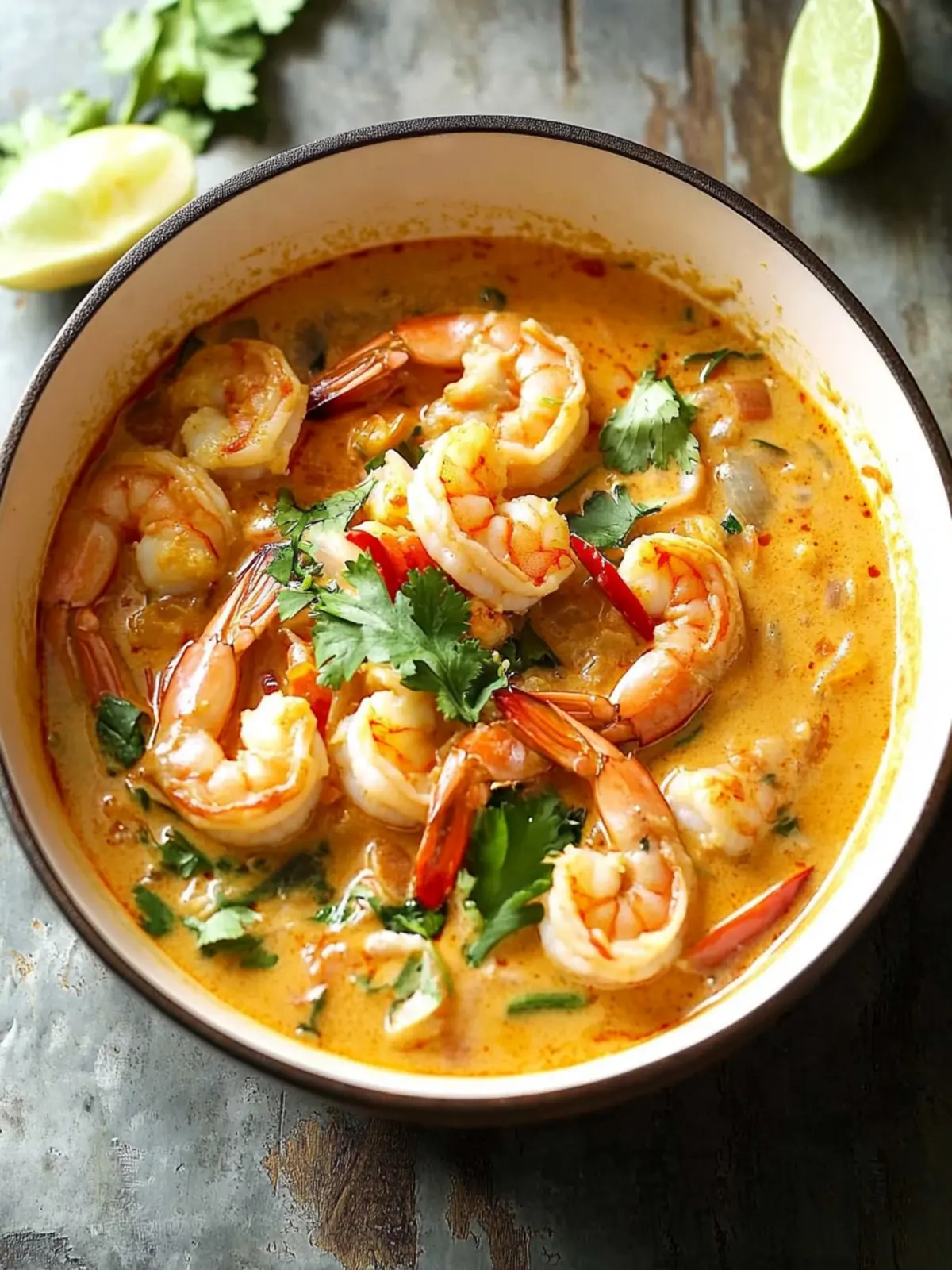
Thai Coconut Shrimp Curry Variations
Feel free to make this dish your own by exploring these delightful twists and substitutions!
- Dairy-Free: Swap the unsalted butter for coconut oil to maintain a rich flavor while keeping it dairy-free.
- Vegetable-Packed: Add chopped bok choy or spinach in the last minute of cooking for an extra nutrient boost and vibrant green color.
- Protein Alternatives: Use firm tofu instead of shrimp for a vegetarian version that absorbs all the delicious flavors of the curry sauce.
- Nutty Flavor: Stir in 1 tablespoon of peanut butter for a subtle nutty richness that pairs beautifully with the coconut and spices.
- Coconut Alternatives: For a lighter twist, substitute half of the coconut milk with low-fat coconut milk or vegetable broth for fewer calories.
- Heat Lover’s Delight: Increase the sriracha to taste or add sliced fresh chili peppers during cooking for an extra kick of heat.
- Fruity Touch: Incorporate diced pineapple or mango for a sweet contrast to the savory curry, elevating the tropical vibes.
- Rice Options: Serve over quinoa or cauliflower rice instead of traditional steamed rice for a healthy, low-carb twist that complements the flavors beautifully.
Each of these variations is designed to inspire your creativity while keeping the essence of this wonderful dish. Enjoy experimenting!
What to Serve with Thai Coconut Shrimp Curry?
Elevate your meal with delightful accompaniments that enhance the flavors of this aromatic dish.
-
Steamed Jasmine Rice: This fluffy rice absorbs the rich curry sauce beautifully, making every bite a comforting experience. It’s a classic pairing that can’t be overlooked.
-
Crunchy Cucumber Salad: The fresh, crisp textures of cucumber and herbs offer a refreshing contrast, lifting the richness of the curry while adding vibrant color to your plate.
-
Garlic Naan Bread: Perfect for scooping up the luscious curry, this bread brings an added layer of comfort and tradition to your dining experience, making for a satisfying meal.
-
Thai Spring Rolls: Light and filled with fresh ingredients, these rolls provide a delightful crunch along with a hint of herbal notes that complement the curry’s flavors wonderfully.
-
Mango Sticky Rice: For a sweet finish, this classic Thai dessert with its creamy coconut sauce will wrap up your meal on a high note, balancing the savory aspects of the curry.
-
Coconut Milk Smoothie: Blend coconut milk with fresh fruits like banana or pineapple for a little tropical twist, enhancing the coconut theme while being wonderfully refreshing.
-
Lemongrass Iced Tea: With hints of citrus and earthiness, this cooling beverage will cleanse your palate and amplify the exotic experience of enjoying your Thai Coconut Shrimp Curry.
How to Store and Freeze Thai Coconut Shrimp Curry
Fridge: Store leftover Thai Coconut Shrimp Curry in an airtight container for up to 3 days. Allow it to cool completely before refrigerating to maintain freshness.
Freezer: For long-term storage, freeze the curry in a freezer-safe container for up to 2 months. Ensure it’s completely cooled before sealing to avoid ice crystals.
Reheating: When ready to serve, thaw overnight in the fridge and reheat gently on the stovetop over low heat, adding a splash of coconut milk or broth to maintain creaminess.
Airtight Guidance: Always use airtight containers to prevent freezer burn and keep your delicious Thai Coconut Shrimp Curry tasting fresh and flavorful!
Expert Tips for Thai Coconut Shrimp Curry
-
Prep Ahead: Gather and prepare all ingredients before cooking. This avoids last-minute scrambles and ensures you don’t overlook any vital component in your delicious curry.
-
Perfectly Sear Shrimp: Don’t overcrowd the skillet when searing shrimp—this ensures they cook evenly and develop that beautiful golden color without steaming.
-
Flavor Boost: Taste the sauce before adding shrimp; adjust seasoning with more fish sauce or lime juice as desired. This is your opportunity to elevate that amazing Thai Coconut Shrimp Curry flavor!
-
Avoid Thick Sauce: If the sauce thickens too much, add a splash of chicken broth or coconut milk to reach your desired consistency. You want it creamy but not overly dense.
-
Customize Ingredients: Feel free to include your favorite veggies like snap peas or carrots to make the dish your own while ensuring a delightful crunch and nutrition.
-
Proper Storage: Leftovers can be stored in an airtight container for up to three days. Reheat gently to maintain the shrimp’s tenderness and enjoy it again!
Make Ahead Options
These Thai Coconut Shrimp Curry ingredients are perfect for meal prep enthusiasts looking to save time on busy weeknights! You can marinate the shrimp with soy sauce, red pepper flakes, turmeric, garlic powder, and white pepper up to 24 hours in advance, allowing the flavors to meld beautifully. Additionally, you can chop the vegetables (bell pepper, garlic, ginger, shallot) and store them in an airtight container in the fridge for up to 3 days. When you’re ready to serve, simply heat oil and butter in the skillet, sauté the veggies, deglaze, and finish cooking the shrimp with the sauce until it’s just as delicious as freshly made. This prep not only saves time but also ensures your meal is filled with vibrant flavors, making it a fantastic option for those hectic evenings!
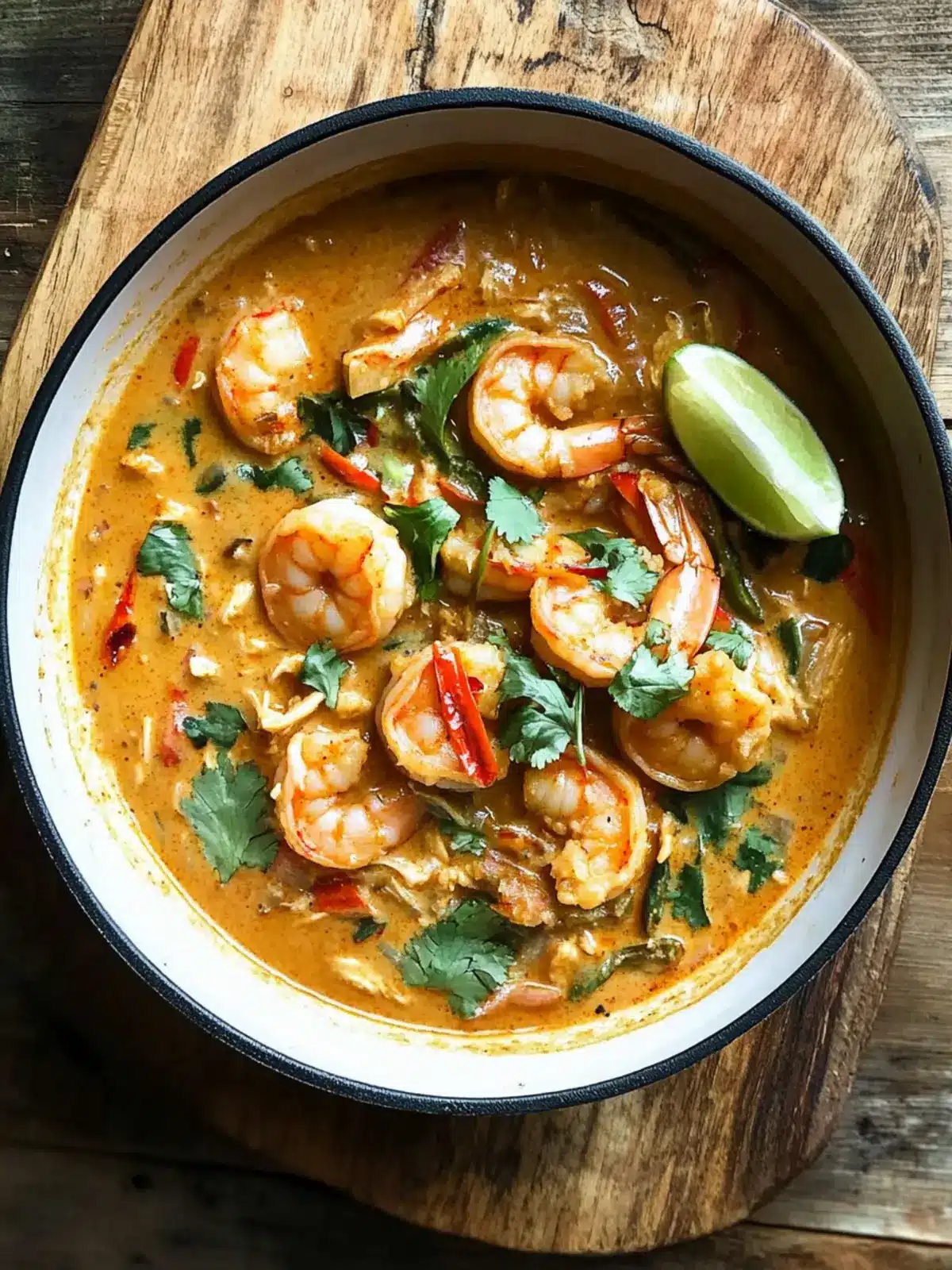
Thai Coconut Shrimp Curry Recipe FAQs
What’s the best way to choose fresh shrimp?
When selecting shrimp, look for those that are firm and have a slight ocean scent. Avoid any with dark spots or a strong fishy odor. Fresh shrimp should be pink and slightly translucent. If buying frozen, choose bags labeled as “flash-frozen” to ensure optimal freshness.
How can I store leftover Thai Coconut Shrimp Curry?
Store your leftover curry in an airtight container in the fridge for up to 3 days. Make sure to let it cool completely before sealing to keep it fresh. When you’re ready to enjoy it again, simply reheat it gently on the stove, adding a splash of coconut milk or broth to retain that creamy consistency.
Can Thai Coconut Shrimp Curry be frozen?
Absolutely! You can freeze your curry for up to 2 months. Make sure it’s completely cooled before transferring to a freezer-safe container. When you’re ready to serve, thaw it overnight in the fridge, and reheat gently on the stovetop over low heat. Adding a bit of coconut milk can help bring back the curry’s luscious texture.
What should I do if my shrimp are overcooked?
If your shrimp are overcooked, they can become rubbery. However, there’s still hope! Try adding a splash of broth and letting them simmer gently for a minute or two. This can help introduce moisture and revive their tenderness. For future use, remember that shrimp cook quickly, typically just 1-2 minutes per side.
Can I make this curry gluten-free?
Yes! To make Thai Coconut Shrimp Curry gluten-free, simply use gluten-free soy sauce or tamari in place of traditional soy sauce, and ensure your curry paste is also gluten-free. The rest of the ingredients are naturally gluten-free, so you can enjoy a worry-free meal without compromising on flavor!
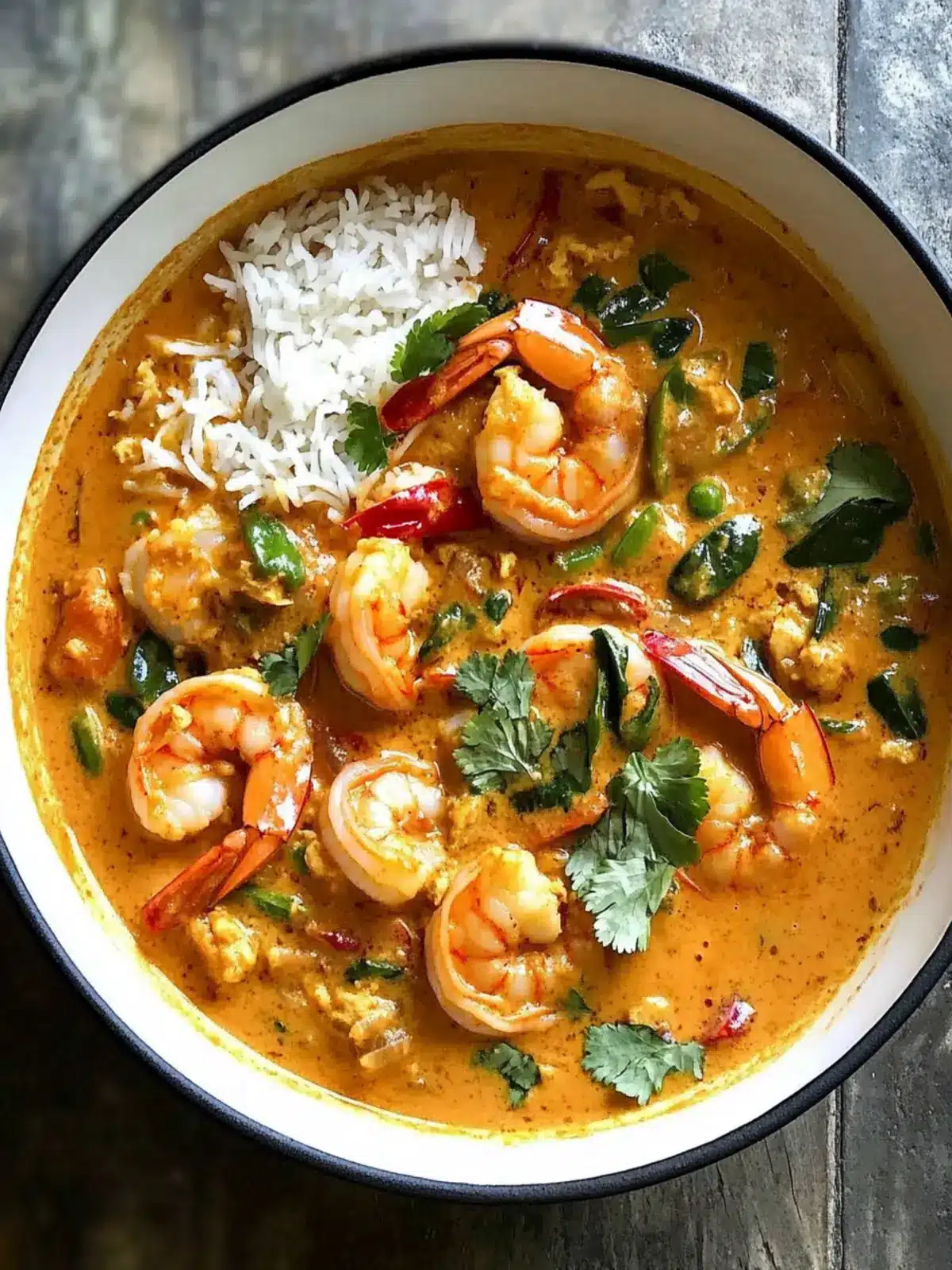
Thai Coconut Shrimp Curry That Will Impress Your Taste Buds
Ingredients
Equipment
Method
- In a bowl, combine the shrimp, soy sauce, red pepper flakes, turmeric, garlic powder, and white pepper. Stir gently until the shrimp are well coated, set aside for later.
- Grate the garlic and ginger. Finely chop the shallot and slice the bell pepper. This prep work will help everything cook evenly and infuse the flavors.
- In a large skillet, heat the vegetable oil and butter over high heat. Add the shrimp in a single layer, sear for 1 minute per side until they are lightly golden. Remove from the skillet and set aside.
- In the same skillet, add the sliced bell pepper. Sauté for about 5 minutes, until it softens. Add the grated garlic, ginger, and chopped shallot, cooking for another 2 minutes until fragrant and soft.
- Pour in the chicken broth. Simmer for about 2 minutes, using a wooden spoon to scrape up any tasty brown bits from the skillet's bottom.
- Stir in the red curry paste, brown sugar, turmeric, cumin, coriander, white pepper, soy sauce, and fish sauce. Cook for 1 minute, stirring frequently to let the flavors blend beautifully.
- Pour in the unsweetened coconut milk and bring the mixture to a boil. Let it simmer for 5 minutes until the sauce thickens, stirring occasionally for the creamiest texture.
- Add fresh lime juice, sriracha (if using), and torn Thai basil, stirring to combine. Finally, toss in the seared shrimp and let them simmer for no more than 1 minute to heat through.
- Top your curry with cilantro leaves, crispy fried onions, and slices of chili pepper for garnish. Serve alongside a crunchy cucumber salad and fluffy steamed rice for the perfect meal.