
There’s something undeniably captivating about the colorful spread of ingredients sizzling on my stovetop as I prepare japchae, the beloved Korean glass noodle stir fry. The vibrant hues of fresh vegetables mix with the rich aroma of sesame oil, creating an inviting ambiance that makes the kitchen feel like a cozy haven. As I stir the sweet potato noodles coated in savory sauce, memories of family dinners come flooding back, reminding me of the joy that this dish brings to the table.
Whether you’re looking for a comforting weeknight dinner or a showstopper for your next gathering, this easy-to-master recipe checks all the boxes. Packed with flavor and brimming with nutrients, japchae is not only a feast for your taste buds but also a chance to explore the wonderful world of homemade meals. Best of all, you can enjoy it hot, warm, or even at room temperature, making it the perfect versatile dish for any occasion. Let’s dive into making this delightful stir fry that’s sure to impress and satisfy!
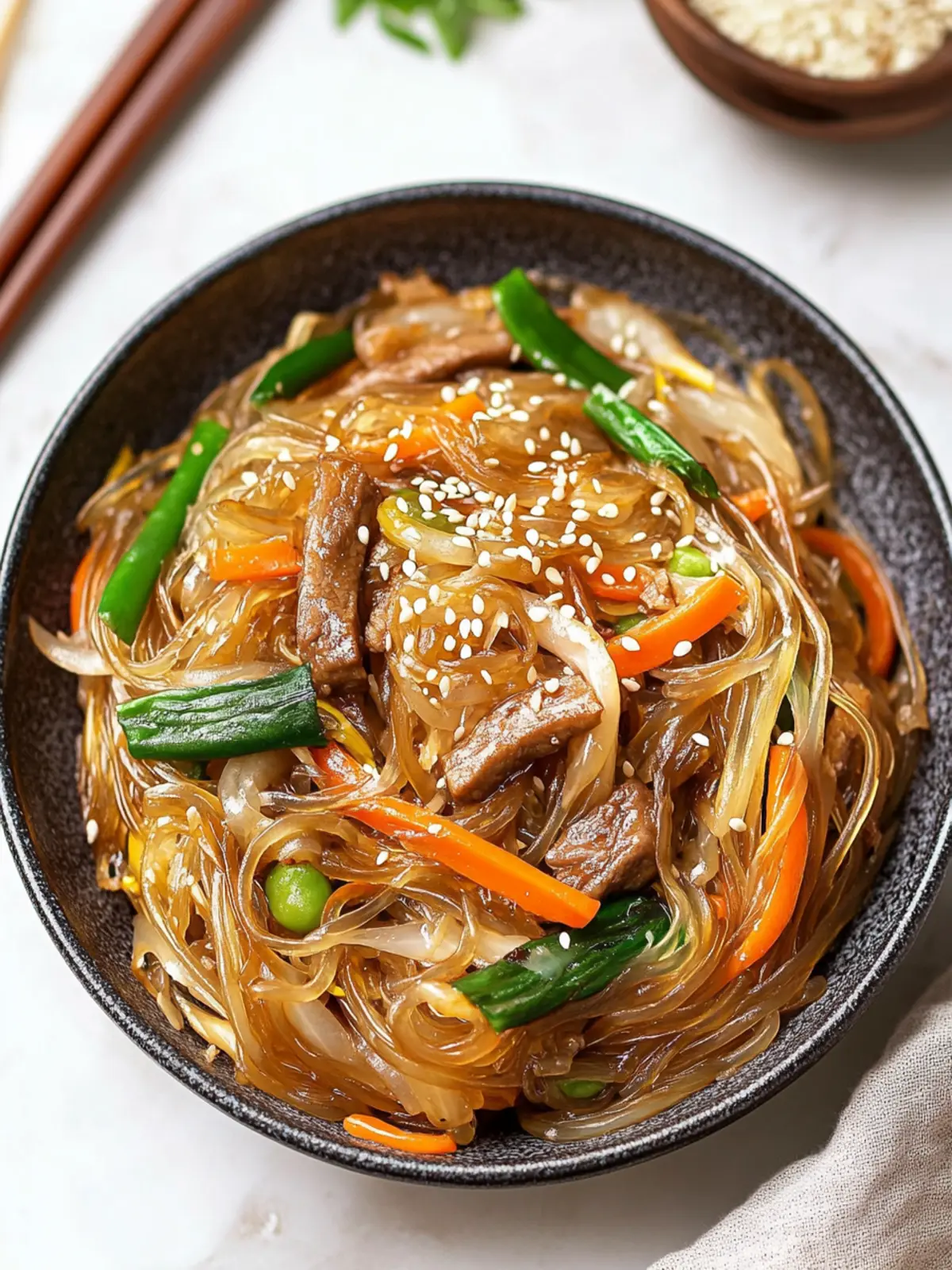
Why is Japchae the perfect stir fry?
Versatility: This dish shines in its ability to be tailored to your taste, whether you prefer beef, pork, or a vegetarian option. Quick preparation: With a total time of just 30 minutes, it’s the ideal solution for busy weeknights. Colorful presentation: The vibrant mix of vegetables not only looks stunning but also makes it a nutritious choice. Crowd-pleasing flavor: The savory, sweet sauce enriched with sesame oil creates a taste sensation that everyone will love. If you need ideas on how to pair this with your main dish, check out my guide on exciting side dishes that complement japchae beautifully!
Japchae Ingredients
Preparing for a flavorful adventure? Here’s what you’ll need to create the perfect japchae (Korean glass noodle stir fry)!
For the Noodles
- Sweet potato glass noodles – These chewy noodles provide the perfect base for your stir fry and absorb the savory sauce beautifully.
For the Protein
- Beef or pork strips – Choose your favorite protein for that satisfying heartiness; feel free to swap with tofu for a vegetarian twist!
- Eggs – Adds a rich texture and color, enhancing your dish’s overall appeal.
For the Vegetables
- Carrot – The sweetness of julienned carrots balances the savory flavors beautifully.
- Yellow onion – Thinly sliced for an aromatic touch that complements all ingredients.
- Mushrooms – Their earthiness rounds out the flavor profile.
- Baby spinach – Packed with nutrients, it adds vibrant color and a hint of freshness.
- Green onion – A delightful burst of flavor; don’t hesitate to sprinkle extra on top for garnish!
For Cooking
- Oil for cooking – Use a neutral oil to prevent overpowering the dish’s flavor; consider sesame oil for an extra hint of nuttiness.
- Toasted sesame seeds – Optional, but these add a lovely crunch and visual appeal when sprinkled on right before serving.
For the Sauce
- Soy sauce (light sodium) – Gives your japchae the perfect savory kick; adjust the amount to your taste!
- Honey – A natural sweetener that balances the saltiness of the soy sauce wonderfully.
- Brown sugar – Adds depth to the sweetness for a harmonious flavor.
- Toasted sesame oil – The secret ingredient that ties everything together with its distinct aroma and flavor.
- Salt and black pepper – Essential for seasoning, use as needed to enhance the deliciousness!
How to Make Japchae
-
Combine the Sauce: In a mixing bowl, whisk together the soy sauce, honey, brown sugar, and toasted sesame oil until well blended. Set this delectable sauce aside to let the flavors meld.
-
Cook the Noodles: Bring a large pot of water to a boil. Add the sweet potato glass noodles and cook for about 10-15 minutes, stirring occasionally, until they’re tender and chewy.
-
Cool the Noodles: Once cooked, drain the noodles and rinse them under cold water until completely cooled. Make sure to drain them well to avoid excess water in your stir fry.
-
Prepare the Eggs: In a large nonstick pan over medium heat, add a little oil. Pour in the beaten eggs, swirling them to form a thin layer. Cook until set, then flip gently. Remove and cool, before slicing into thin strips.
-
Sear the Beef: With the same pan heated to medium-high, add a drizzle of oil and throw in the beef strips. Season with salt and pepper, searing them until golden brown, about 4-5 minutes. Transfer to a plate once done.
-
Sauté the Vegetables: Add more oil to the pan if necessary and sauté the vegetables (carrot, onion, mushrooms, spinach, and green onion) over medium heat until they’re tender, remembering to add a pinch of salt and black pepper.
-
Mix the Sauce: Return to the large pan or a stir fry pan, and pour in the prepared japchae sauce over medium heat. Stir until the sugar dissolves and the sauce bubbles, then lower the heat.
-
Combine Everything: Add the cooked noodles to the pan and toss them well in the sauce until evenly coated. Then, mix in the sautéed vegetables, the seared beef (or pork), and the egg strips. Toss everything until combined and then remove from heat.
-
Serve and Enjoy: You can serve the japchae in individual portions or family-style, garnished with toasted sesame seeds. Enjoy this dish hot, warm, or even at room temperature!
Optional: Garnish with extra green onions for an added pop of flavor.
Exact quantities are listed in the recipe card below.
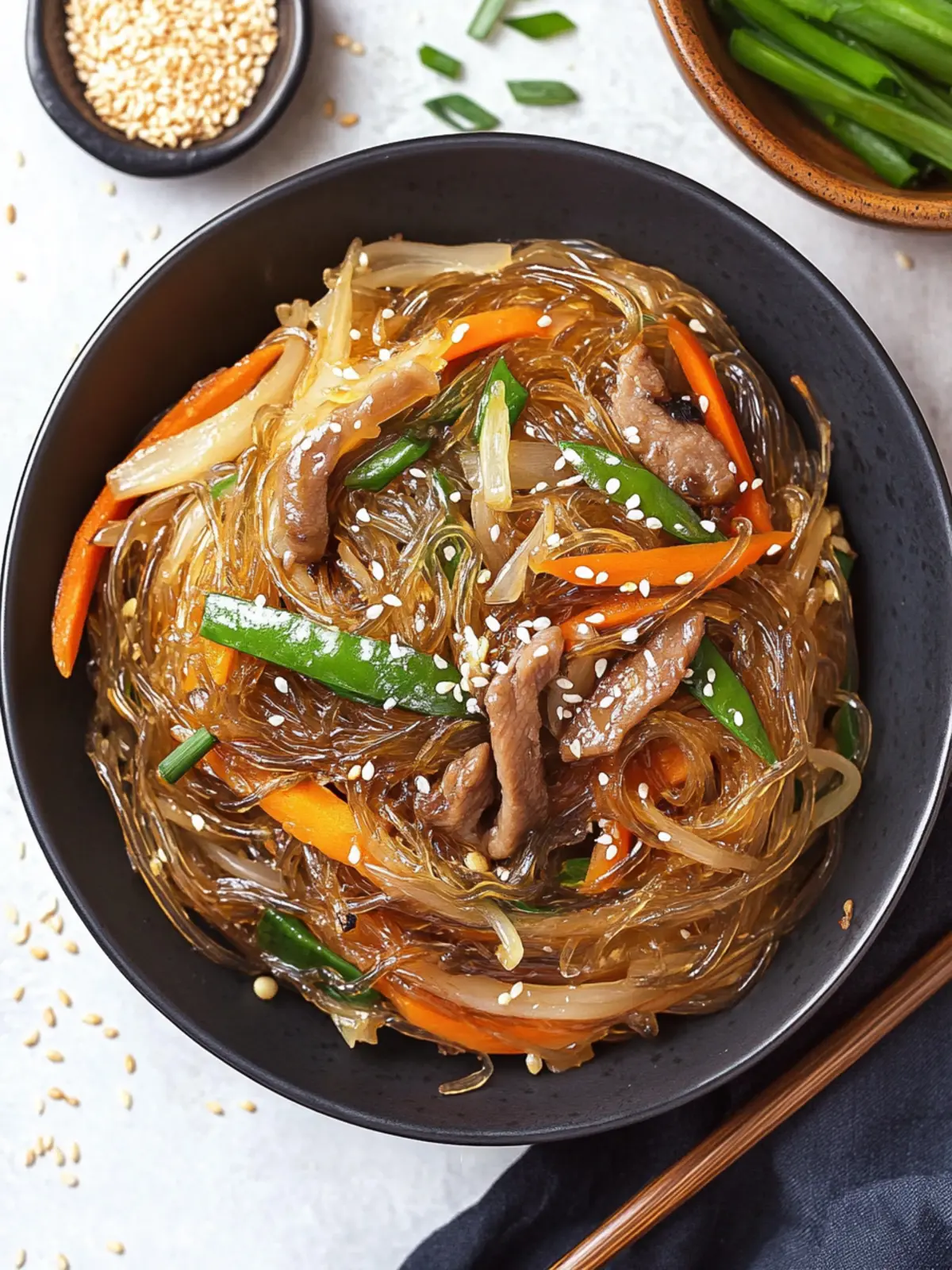
Make Ahead Options
These japchae (Korean glass noodle stir fry) are a fantastic choice for meal prep! You can prepare the sauce and chop the vegetables up to 3 days in advance, storing them in the refrigerator to keep them fresh. Additionally, you can cook the sweet potato glass noodles and sauté the beef, letting them cool before refrigerating them separately for up to 24 hours. When you’re ready to enjoy this delightful dish, simply reheat the sautéed beef and noodles in a large pan with a splash of water to revive the texture, toss in the prepared vegetables and sauce, and follow the final steps in the recipe. This way, you’ll have a restaurant-quality meal on the table with minimal effort, perfect for busy weeknights!
Tips for the Best Japchae
• Noodle Attention: Ensure you do not overcook the sweet potato glass noodles; they should be tender yet chewy for the best texture in your japchae.
• Ingredient Order: Sauté vegetables starting from the heartiest to the softest (like carrots first); this ensures everything cooks perfectly and maintains its vibrant color.
• Sauce Balance: Taste the sauce before adding to the noodles; adjust soy sauce or honey to suit your flavor preferences for a balanced seasoning in your japchae.
• Cool and Drain: After boiling the noodles, rinse them under cold water thoroughly and drain well to prevent them from becoming gummy in your stir fry.
• Serving Temperature: Remember, japchae can be enjoyed hot, warm, or cold! This versatility makes it a great dish for meal prep or gatherings.
How to Store and Freeze Japchae
Fridge: Store leftover japchae in an airtight container in the refrigerator for up to 3 days; this helps maintain the flavor and texture of the noodles and veggies.
Freezer: Freeze japchae in a freezer-safe container for up to 2 months. Label it with the date to keep track of freshness; before serving, thaw overnight in the fridge.
Reheating: To reheat, saute on medium heat with a splash of water or additional sesame oil for added flavor until heated through, about 5-7 minutes.
Room Temperature: If serving at room temperature, keep it out for no more than 2 hours to ensure food safety; this enables everyone to enjoy the delicious flavors of japchae without worry!
What to Serve with Japchae?
Looking to create a delightful feast around your homemade japchae? Here are some mouthwatering pairings that will elevate your meal experience.
-
Korean Fried Chicken: Crispy and juicy, the savory flavors of this chicken dish complement the sweet and salty notes of japchae beautifully, promising a satisfying crunch with every bite.
-
Kimchi: This traditionally fermented vegetable dish adds a spicy and tangy kick that awakens the palate, making it a perfect companion to the softer textures of japchae.
-
Steamed Rice: Soft, fluffy rice serves as a wonderful canvas for the rich flavors of japchae, allowing each delicious bite to be soaked up and enjoyed fully. Pairing them creates a comforting, homey meal that warms the heart.
-
Spicy Tofu Stir Fry: For a vegetarian option, a spicy tofu stir fry adds a great protein boost and exciting heat while maintaining that harmonious balance of flavors and textures alongside japchae.
-
Cucumber Salad: The fresh crunch of a light, tangy cucumber salad provides a refreshing contrast to the savory noodles, enhancing your overall dining experience with its crispness.
-
Miso Soup: This warming soup, rich in umami flavor, complements the savory aspects of japchae perfectly, offering a comforting sip between delicious bites and enhancing the meal’s overall experience.
-
Sake or Soju: For a drink pairing, enjoy a glass of chilled sake or soju. These traditional beverages offer a clean finish that balances the richness of your meal while adding an authentic touch to the dining experience.
-
Mango Sticky Rice: For dessert, this sweet and creamy treat rounds out your meal irresistibly, creating a delightful contrast with the savory flavors of japchae and leaving everyone with a sweet ending.
Japchae Variations & Substitutions
Feel free to explore your creativity in the kitchen by customizing this delightful dish to your liking!
-
Vegetarian: Substitute beef or pork with tofu or tempeh for a satisfying meatless version that still packs a punch.
-
Spicy Kick: Add sliced jalapeños or a splash of sriracha to the stir fry for a fiery twist that will awaken your taste buds.
-
Mushroom Medley: Use a mix of wild mushrooms instead of regular ones for a gourmet taste and a variety of textures that will elevate your dish.
-
Gluten-Free: Swap the soy sauce for tamari or coconut aminos to make this dish friendly for gluten-sensitive diners without compromising flavor.
-
Extra Crunch: Toss in some roasted peanuts or cashews just before serving for a delightful crunch and nutty flavor that contrasts nicely with the soft noodles.
-
Citrus Zing: Squeeze fresh lime juice over the finished dish for a zesty brightness that enhances the sweet and savory notes.
-
Seasoned Egg: For an umami boost, use seasoned eggs (like the ones in Japanese chawanmushi) instead of plain eggs to add depth to your meal.
-
Sweet Variance: Experiment with different sweeteners like agave syrup or maple syrup in the sauce to find your preferred level of sweetness while keeping it deliciously unique.
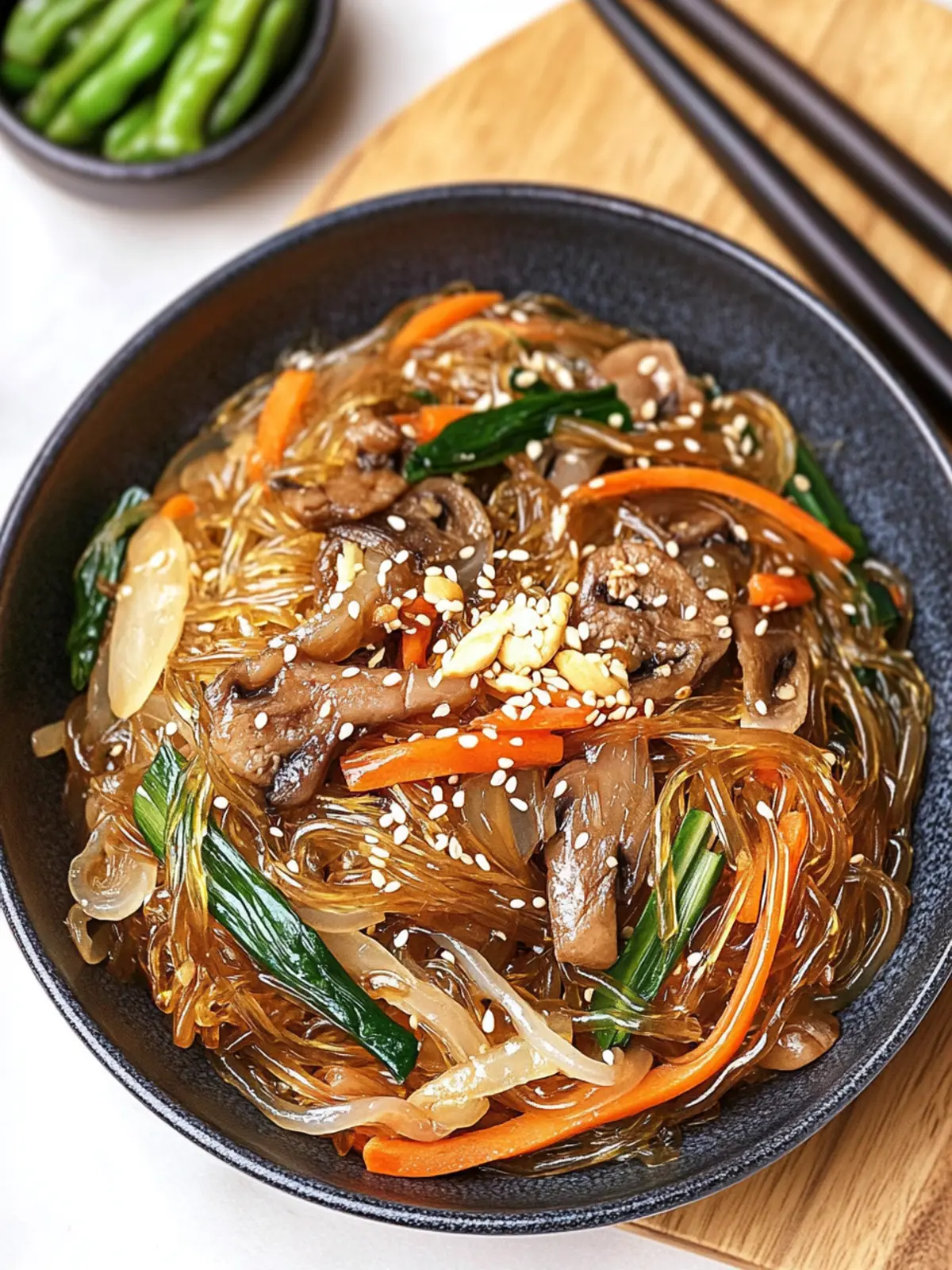
Japchae (Korean Glass Noodle Stir Fry) Recipe FAQs
How do I choose the right sweet potato glass noodles?
Absolutely! When selecting sweet potato glass noodles, look for packages that list only sweet potato starch as ingredients. The noodles should be translucent and not broken. Check for expiration dates to ensure freshness—it’s best to purchase from a reputable brand or store.
How should I store leftover japchae?
Store leftover japchae in an airtight container in the refrigerator for up to 3 days. Make sure the dish is completely cooled before sealing to prevent condensation that could make it soggy. If you notice any dark spots or off scents, it’s best to discard.
Can I freeze japchae?
Yes, you can! To freeze, place the cooled japchae in a freezer-safe container and label it with the date. It will remain good for up to 2 months. When ready to enjoy, thaw overnight in the fridge. Reheat in a skillet over medium heat with a splash of water for about 5-7 minutes until heated through.
What should I do if my noodles are sticky?
Very! Sticky noodles can happen if they’re overcooked or not rinsed properly after boiling. If this occurs, try breaking apart any stuck noodles gently with a fork and sauté them in a bit of oil while adding a splash of water or sauce to separate them further, stirring until they regain their intended texture.
Is japchae safe for people with allergies?
Make sure to check for any allergies! The japchae sauce contains soy sauce, which can be a concern for those with soy allergies. You can substitute with a gluten-free soy sauce or a liquid aminos option. Always ensure all other ingredients are safe per individual dietary needs, especially when serving to guests!
How should I reheat refrigerated japchae?
To reheat, add the japchae to a skillet over medium heat. I often like to add a splash of sesame oil or a little water to help it heat evenly and regain some of its original moisture. Stir occasionally until heated through; this should take about 5-7 minutes.
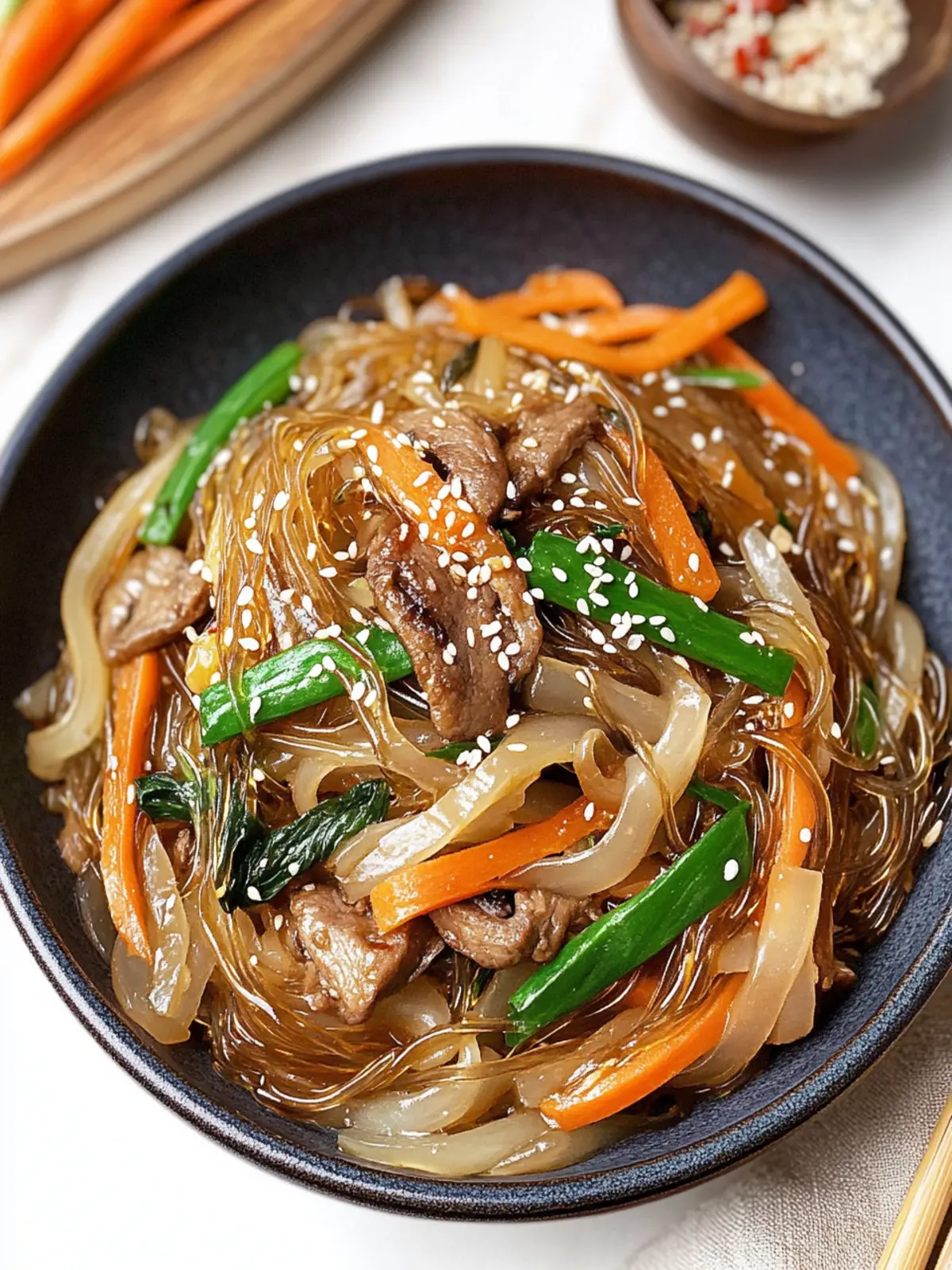
Irresistible Japchae: Master Korean Glass Noodle Stir Fry!
Ingredients
Equipment
Method
- In a mixing bowl, whisk together the soy sauce, honey, brown sugar, and toasted sesame oil until well blended. Set aside.
- Bring a large pot of water to a boil. Add the sweet potato glass noodles and cook for about 10-15 minutes, stirring occasionally, until tender and chewy.
- Drain and rinse the noodles under cold water until completely cooled and drain well.
- In a large nonstick pan over medium heat, add a little oil and pour in the beaten eggs. Cook until set, then flip gently and remove once cooked.
- Sear the beef strips in the same pan over medium-high heat, seasoning with salt and pepper, until golden brown.
- Sauté the vegetables (carrot, onion, mushrooms, spinach, and green onion) over medium heat until tender, adding salt and pepper.
- Return to the large pan, pour in the prepared sauce and stir until the sugar dissolves and the sauce bubbles.
- Add the cooked noodles to the pan and toss well in the sauce. Mix in sautéed vegetables, seared beef, and egg strips until combined.
- Serve the japchae garnished with toasted sesame seeds.