
There’s a certain delight in breaking bread—especially when that bread is a perfectly crusty Italian Ciabatta. The first time I pulled a warm loaf from my oven, the enticing aroma wrapped around my kitchen like a comforting hug. As the crust crackled under my fingers, I knew I had unearthed something extraordinary. This Ciabatta isn’t just a vessel for your favorite sandwich fillings; it’s the star of the show, with a chewy interior and a flavor that dances with hints of olive oil and a sublte sweetness.
This recipe merges traditional techniques and simple ingredients to create a bread that will elevate any meal from ordinary to unforgettable. It’s an opportunity to embrace your inner baker, with a process that rewards patience. Perfect for a sunny weekend brunch or a cozy evening dinner, these rolls are sure to impress your family and friends.
So, whether you’re looking to escape from bland fast food or simply seeking the joy of homemade bread, this Italian Ciabatta Sandwich Bread awaits you. Let’s get baking!
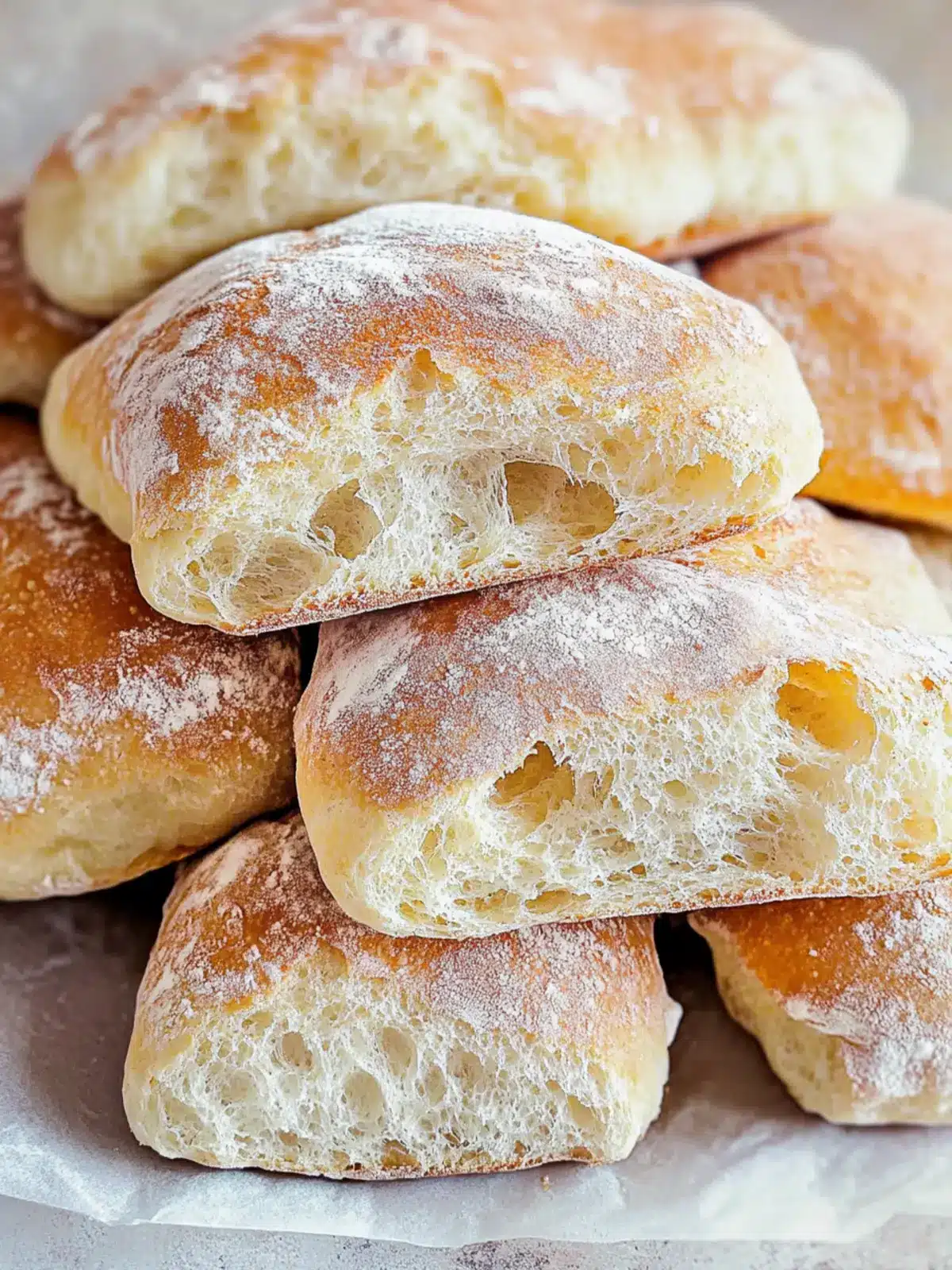
Why will you love Italian Ciabatta Sandwich Bread?
Simplicity at Its Best: This recipe is straightforward and perfect for both novice bakers and seasoned chefs.
Irresistible Aromas: Your kitchen will fill with the inviting smell of freshly baked bread, luring everyone to gather around!
Versatile Delight: Whether used for sandwiches, bruschetta, or enjoyed with olive oil, this ciabatta adapts beautifully to any meal.
Crowd-Pleasing Treat: Impress your family and friends with bakery-quality rolls, perfect for sharing during weekend brunches or casual dinners.
The patience required in letting the dough rise and ferment will reward you with an unforgettable flavor! Let’s dive into the process to make this delightful bread.
Italian Ciabatta Sandwich Bread Ingredients
For the Dough
• Bread flour – 8 ½ cups for a strong structure and chewy texture.
• Active dry yeast – 3 teaspoons to help the dough rise and provide a delightful flavor.
• Water (70°F or 21°C) – 2 ¼ cups ensures proper yeast activation and dough hydration.
• Semolina flour – 3 cups plus more for dusting, giving the crust a unique texture and color.
• Granulated sugar – 2 tablespoons enhances browning and adds a hint of sweetness.
• Extra virgin olive oil – 5 tablespoons for rich flavor and softness in the crumb.
• Fine sea salt – 6 teaspoons to heighten all the delicious flavors in this Italian Ciabatta Sandwich Bread.
For the BIGA
• Semolina flour – 3 cups, this will add to the classic ciabatta taste.
• Active dry yeast – 2 teaspoons, assisting in the fermentation process for a more complex flavor.
• Water (70°F or 21°C) – 2 cups plus 1 tablespoon needed for the BIGA mixture.
For Dusting
• Semolina flour – Additional for generously dusting the pan and dough, preventing sticking during baking.
Embrace the process of creating this fabulous Italian Ciabatta that promises to elevate your meals to new heights!
How to Make Italian Ciabatta Sandwich Bread
-
Mix the Flour: In a stand mixer fitted with a dough hook, combine bread flour and 3 teaspoons of active dry yeast on medium low speed. Gradually add in 2 ¼ cups of water until the mixture is well combined.
-
Form the Dough: Once a shaggy dough forms, increase the mixer speed to high. Continue mixing for about 1 – 2 minutes until the dough becomes a solid mass.
-
Let It Rise: Transfer the dough to a large mixing bowl and cover it with a tea towel. Let it rise at room temperature for 12 – 16 hours, until the dough surface is crusted over and flat.
-
Prepare the BIGA: Remove a thin layer from the crusty top of the BIGA, and measure about 5 cups (1200 grams) for the next step.
-
Combine Semolina Ingredients: In a stand mixer, mix semolina flour and 2 teaspoons of active dry yeast on medium low speed. Slowly add 2 cups plus 1 tablespoon of water, scraping down the sides as needed until well mixed.
-
Incorporate the BIGA: Add the measured BIGA to the semolina mixture and mix until fully incorporated.
-
Add Sweetness: Stir in the granulated sugar, mixing until it is well combined with the dough mixture.
-
Mix in Oil and Salt: Pour in the extra virgin olive oil at the center of the dough and mix it in. Finally, add the fine sea salt, continuing to mix.
-
Knead the Dough: Increase the mixer speed to high and knead until you hear a popping sound, indicating the dough has wrapped around the hook and is now smooth but sticky.
-
Prepare the Pan: Generously dust a metal 9 x 13 inch (23 x 33 cm) pan with semolina flour to prevent sticking.
-
Final Rise: Place the dough in the prepared pan, sprinkling semolina on the top and sides. Cover with plastic wrap and allow it to rise in a warm place until it has doubled in size.
-
Cut the Rolls: Generously dust a clean work surface with semolina flour. Gently turn out the dough and, using a bench scraper or sharp knife, cut it into rolls approximately 2.5 x 2.5 inches (6 x 6 cm).
-
Proof the Rolls: Carefully place the rolls on parchment-lined baking sheets, ensuring they’re 1 – 2 inches (3 – 5 cm) apart. Dust their tops with semolina, cover lightly with plastic wrap, and let them proof in a warm spot for about 60 minutes.
-
Preheat the Oven: Set your oven to heat at 400°F (205°C), preparing for baking perfection.
-
Bake: Bake the rolls for 25 – 30 minutes, rotating the sheets halfway through, until they’re lightly golden. Once done, transfer the ciabatta to a cooling rack and cover with a tea towel. Allow them to cool to room temperature before slicing in half.
Optional: Brush with olive oil before serving for an extra touch of flavor!
Exact quantities are listed in the recipe card below.
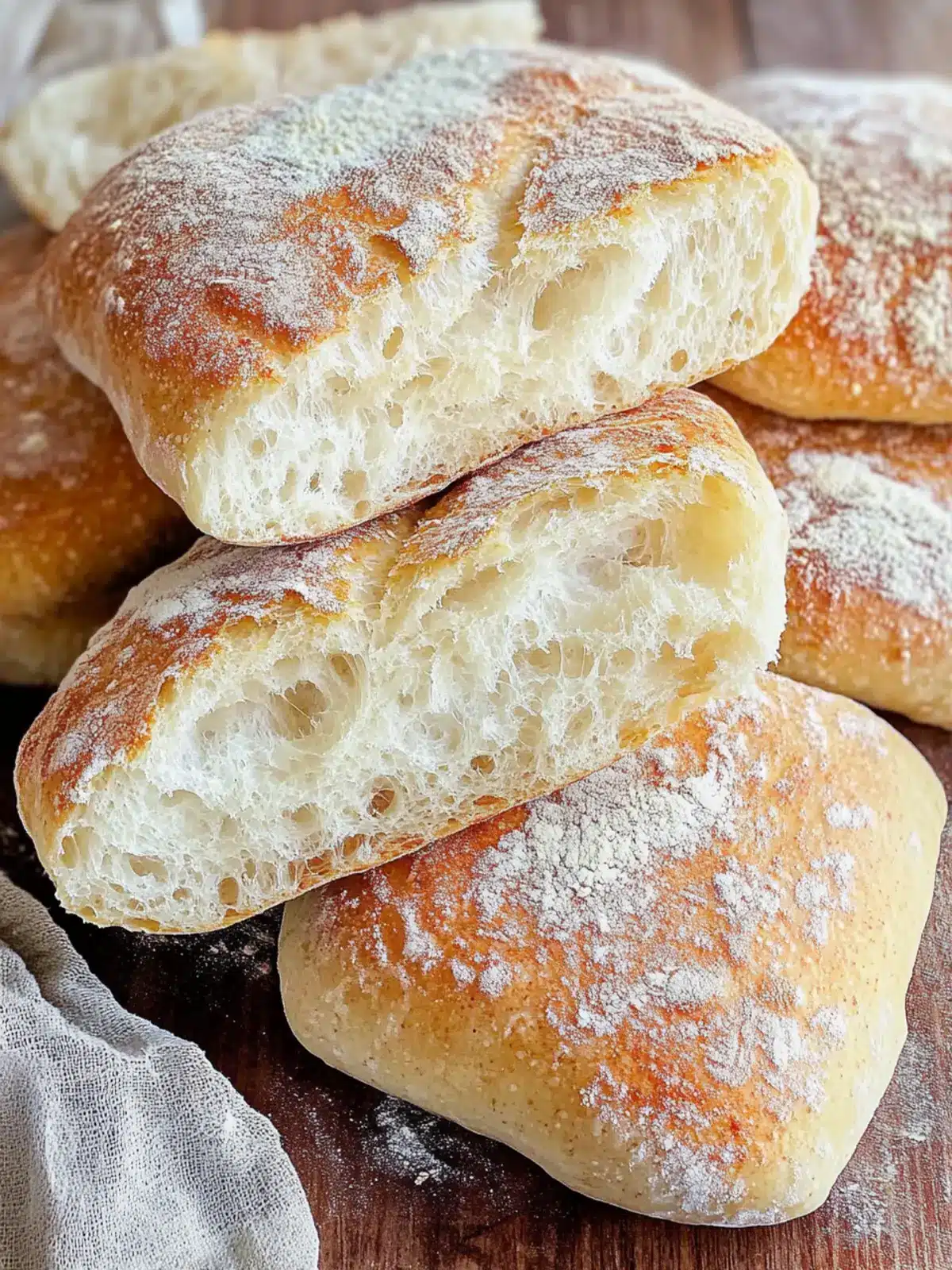
Expert Tips for Italian Ciabatta Sandwich Bread
Hydration is Key: Ensure your water is at the right temperature (70°F or 21°C) to activate the yeast effectively. Too hot or too cold will hinder fermentation.
Don’t Rush the Rise: Allow enough time for the BIGA to rise for at least 12 – 16 hours. This step builds a rich flavor in your Italian Ciabatta Sandwich Bread!
Dust Generously: Use plenty of semolina flour for dusting both the pan and the dough to prevent sticking. This contributes to that signature crispy crust!
Gentle Handling: When cutting the dough into rolls, handle it gently to preserve the air bubbles created during rising—this is key to achieving a light and airy texture.
Rotate for Even Baking: Always rotate your baking sheets halfway through the cooking time for a uniform golden-brown color on all sides of your ciabatta rolls.
Italian Ciabatta Sandwich Bread Variations
Feel free to explore these delightful twists on your ciabatta journey, adding your personal touch to satisfy every taste!
-
Herb-Infused: Mix in 2 tablespoons of dried Italian herbs (like oregano and rosemary) for a fragrant and flavorful dough.
-
Garlic Boost: Add 4 minced garlic cloves during the mixing process for a deliciously rich, savory flavor that will elevate your bread.
-
Cheesy Delight: Fold in 1 cup of shredded mozzarella or parmesan cheese before the final rise for a decadent cheesy ciabatta experience.
-
Whole Wheat: Substitute half of the bread flour with whole wheat flour for a nuttier flavor and added health benefits without sacrificing texture.
-
Olive Oil Variation: Use flavored olive oils, like garlic or chili-infused, instead of regular extra virgin olive oil for a unique twist in flavor.
-
Spicy Kick: Incorporate a teaspoon of red pepper flakes into the dough for a subtle heat that complements the chewy texture beautifully.
-
Sweet Option: Mix in 1/2 cup of raisins or dried cranberries for a sweet twist, perfect for a fancy sandwich or snacking.
-
Fruity Zest: Grate the zest of one lemon or orange into the dough for a refreshing citrusy aroma that uplifts the flavor profile.
Every variation adds its own layer of joy to your ciabatta experience, allowing you to create something uniquely yours!
Make Ahead Options
These Italian Ciabatta Sandwich Bread rolls are perfect for busy home cooks looking to save time! You can prepare the BIGA up to 24 hours in advance, allowing it to fully develop those rich flavors. Simply let it rise overnight, then proceed with mixing the semolina dough in the morning. The cut rolls can also be frozen for up to 3 months. Just flash freeze them on a baking sheet before transferring to a zip-top bag. To serve, let the frozen rolls thaw in the refrigerator overnight and proof for about 60 minutes before baking. This way, you’ll have fresh, bakery-quality ciabatta with minimal effort, ready for your family’s next meal!
How to Store and Freeze Italian Ciabatta Sandwich Bread
Room Temperature: Keep the ciabatta rolls in a paper bag at room temperature for up to 3 days to maintain their crustiness. Avoid plastic bags, as they may cause the crust to become soggy.
Fridge: If you need to store them longer, wrap the rolls tightly in plastic wrap and place them in the fridge for up to 5 days. Reheat in the oven for a few minutes to restore the original texture.
Freezer: Freeze your Italian Ciabatta Sandwich Bread rolls in a resealable plastic bag for up to 3 months. For best results, wrap each roll in parchment paper before sealing to preserve flavor and texture.
Reheating: To reheat from frozen, preheat the oven to 375°F (190°C) and bake directly from frozen for about 10-15 minutes. Enjoy the delightful warmth and crustiness of your freshly baked ciabatta!
What to Serve with Italian Ciabatta Sandwich Bread?
Enhance your exciting homemade experience by pairing your freshly baked ciabatta with these delightful sides and accompaniments.
-
Olive Oil & Balsamic Vinegar:
A classic mix for dipping, this combination brings a burst of flavor that complements the bread’s chewiness. -
Hearty Soups:
A bowl of tomato basil or minestrone is perfect for dipping, creating a comforting and satisfying meal. -
Bruschetta:
Top your ciabatta with fresh tomatoes, garlic, and basil for a refreshing appetizer that complements the bread’s texture. -
Salads:
Serve alongside a vibrant arugula salad tossed with lemon vinaigrette. The tanginess acts as a lovely contrast to the bread. -
Cheese Platter:
Pair with a selection of cheeses like aged provolone or creamy burrata; the richness is beautifully balanced with the ciabatta’s crust. -
Charcuterie Board:
Add prosciutto, salami, and olives to allow guests to make their sandwich combinations, enhancing the social experience of sharing. -
Vegetable Antipasto:
Roasted bell peppers, artichokes, and marinated mushrooms bring varied flavors that brighten any meal. -
Dessert Wine:
A chilled glass of Prosecco or sweet Vin Santo serves as the perfect endnote, balancing the meal with a touch of sweetness.
Enjoy this journey of flavor and texture as you explore the endless possibilities alongside your Italian Ciabatta Sandwich Bread!
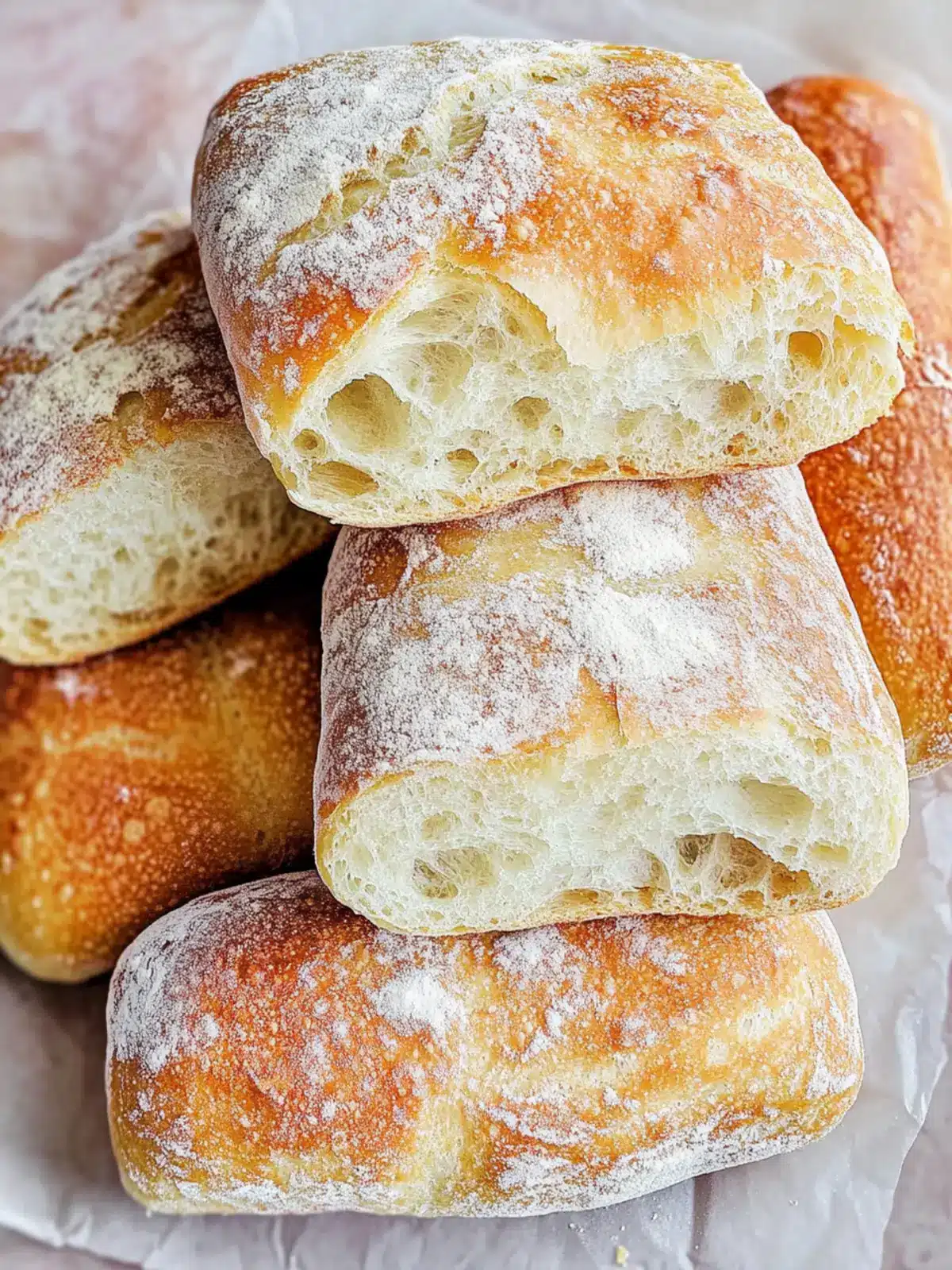
Italian Ciabatta Sandwich Bread Recipe FAQs
What kind of bread flour should I use for this Italian Ciabatta Sandwich Bread?
I recommend using high-protein, bread flour for this ciabatta. It provides strength and structure to the dough, resulting in that lovely chewy texture we all crave!
How should I store my homemade ciabatta rolls?
To maintain the crustiness, store the rolls in a paper bag at room temperature for up to 3 days. If you plan to keep them longer, wrap them tightly in plastic wrap and refrigerate for up to 5 days. Reheating in the oven will help restore their delicious texture!
Can I freeze these ciabatta rolls? What’s the best way?
Absolutely! You can freeze the rolls in a resealable plastic bag for up to 3 months. For the best results, wrap each roll in parchment paper before placing them in the freezer. When you’re ready to enjoy, just preheat your oven to 375°F (190°C) and bake from frozen for about 10-15 minutes.
What should I do if my dough isn’t rising?
If your dough isn’t rising, check the temperature of your workspace and ensure it’s warm enough (ideally around 75°F – 80°F / 24°C – 27°C). Also, investigate if your yeast is still active! If in doubt, do a quick test by mixing yeast with warm water and sugar—if it bubbles after a few minutes, it’s good to go!
Can I use semolina flour for anything else?
Yes, semolina flour is versatile! You can use it to dust pizza peels, pasta, or even make a delicious semolina pudding! It’s a fantastic ingredient to have on hand for various culinary delights.
Are there any dietary considerations for this recipe?
Definitely! This Italian Ciabatta Sandwich Bread contains gluten due to the bread flour, so it’s not suitable for those with gluten sensitivities or celiac disease. If you’re making adjustments for allergies, be mindful of the olive oil and yeast as well; both are generally safe for most but do double-check if you’re serving someone with specific dietary restrictions.
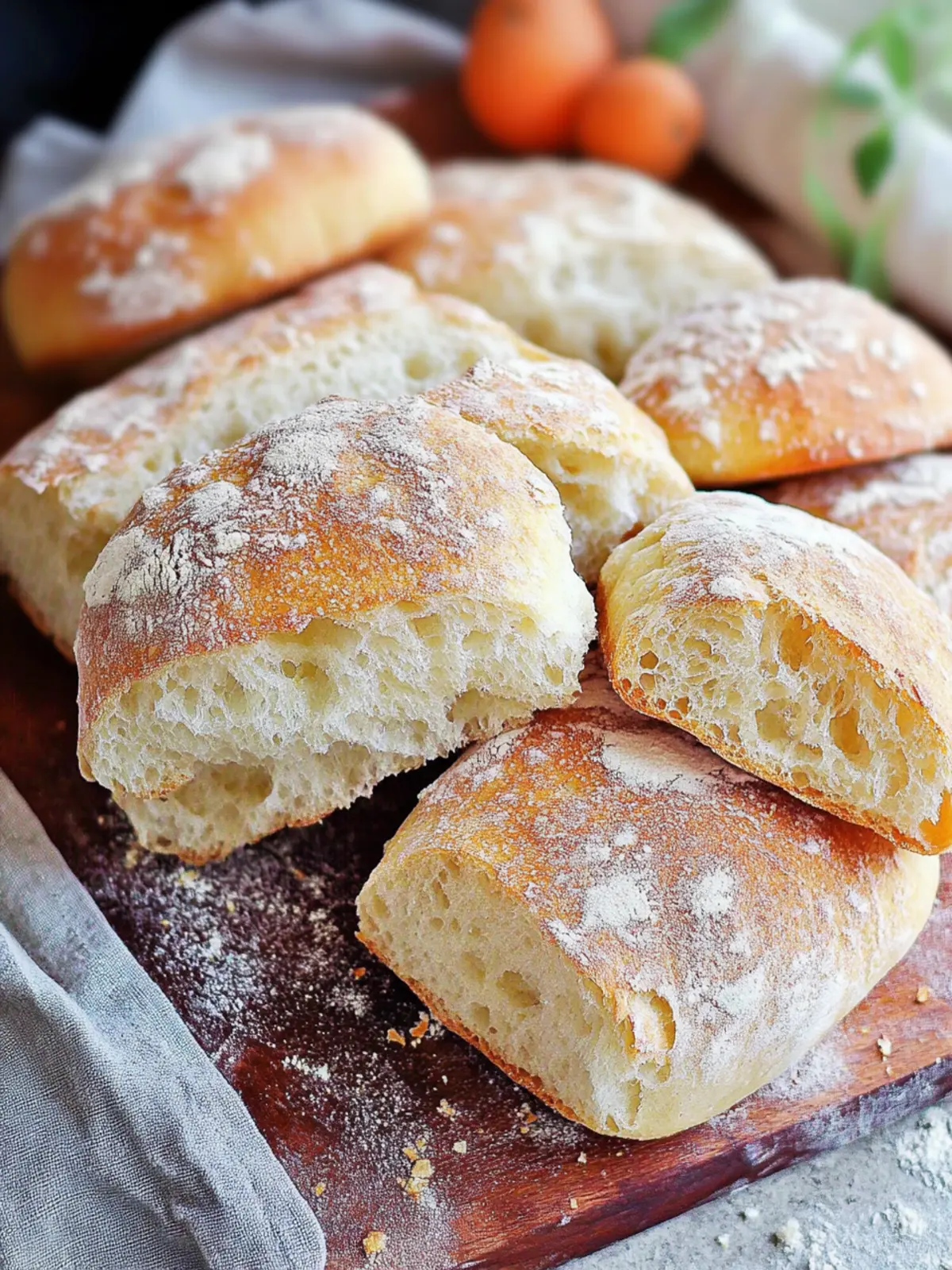
Italian Ciabatta Sandwich Bread: The Ultimate Fresh Delight
Ingredients
Equipment
Method
- In a stand mixer fitted with a dough hook, combine bread flour and 3 teaspoons of active dry yeast on medium low speed. Gradually add in 2 ¼ cups of water until well combined.
- Once a shaggy dough forms, increase the mixer speed to high and mix for about 1 - 2 minutes until it becomes solid.
- Transfer the dough to a mixing bowl, cover with a tea towel, and let it rise at room temperature for 12 - 16 hours.
- Remove a thin layer from the crusty top of the BIGA and measure about 5 cups (1200 grams) for the next step.
- In a stand mixer, mix semolina flour and 2 teaspoons of active dry yeast on medium low speed. Slowly add 2 cups plus 1 tablespoon of water, scraping the sides until well mixed.
- Add the measured BIGA to the semolina mixture and mix until fully incorporated.
- Stir in the granulated sugar until well combined.
- Pour in the extra virgin olive oil and mix it in, then add the fine sea salt and continue mixing.
- Increase the mixer speed to high and knead until the dough is smooth but sticky.
- Dust a metal 9 x 13 inch pan with semolina flour.
- Place the dough in the pan, sprinkle with semolina, cover with plastic wrap, and let it rise until doubled in size.
- Dust a clean surface with semolina flour. Gently turn out the dough and cut it into 2.5 x 2.5 inch rolls.
- Place the rolls on parchment-lined baking sheets, ensuring they're spaced. Dust with semolina and let them proof for about 60 minutes.
- Preheat the oven to 400°F (205°C).
- Bake the rolls for 25 - 30 minutes, rotating halfway through until golden. Transfer to a cooling rack and cover with a tea towel.