
There’s a certain satisfaction that comes from whipping up a dish that not only pleases your palate but also brings a taste of another culture to your dinner table. When I first tried my hand at making Japchae, Korean Stir-Fried Sweet Potato Noodles, I had no idea I was stepping into a vibrant world of flavors and textures. The unforgettable combination of tender beef, earthy shiitake mushrooms, and crisp vegetables all tossed with those uniquely chewy sweet potato noodles creates a symphony of taste that’s hard to resist.
As summer lingers, this dish not only adds a delightful twist to your meal rotation but also brings a comforting warmth against the evening chill. Simplifying the usually elaborate process of Asian cooking, this recipe is perfect for anyone looking to break free from the routine of fast food. You’ll find that impressing family and friends has never been easier—or more delicious! Let’s dive into this easy, flavorful recipe that’s just waiting for your creative touch.
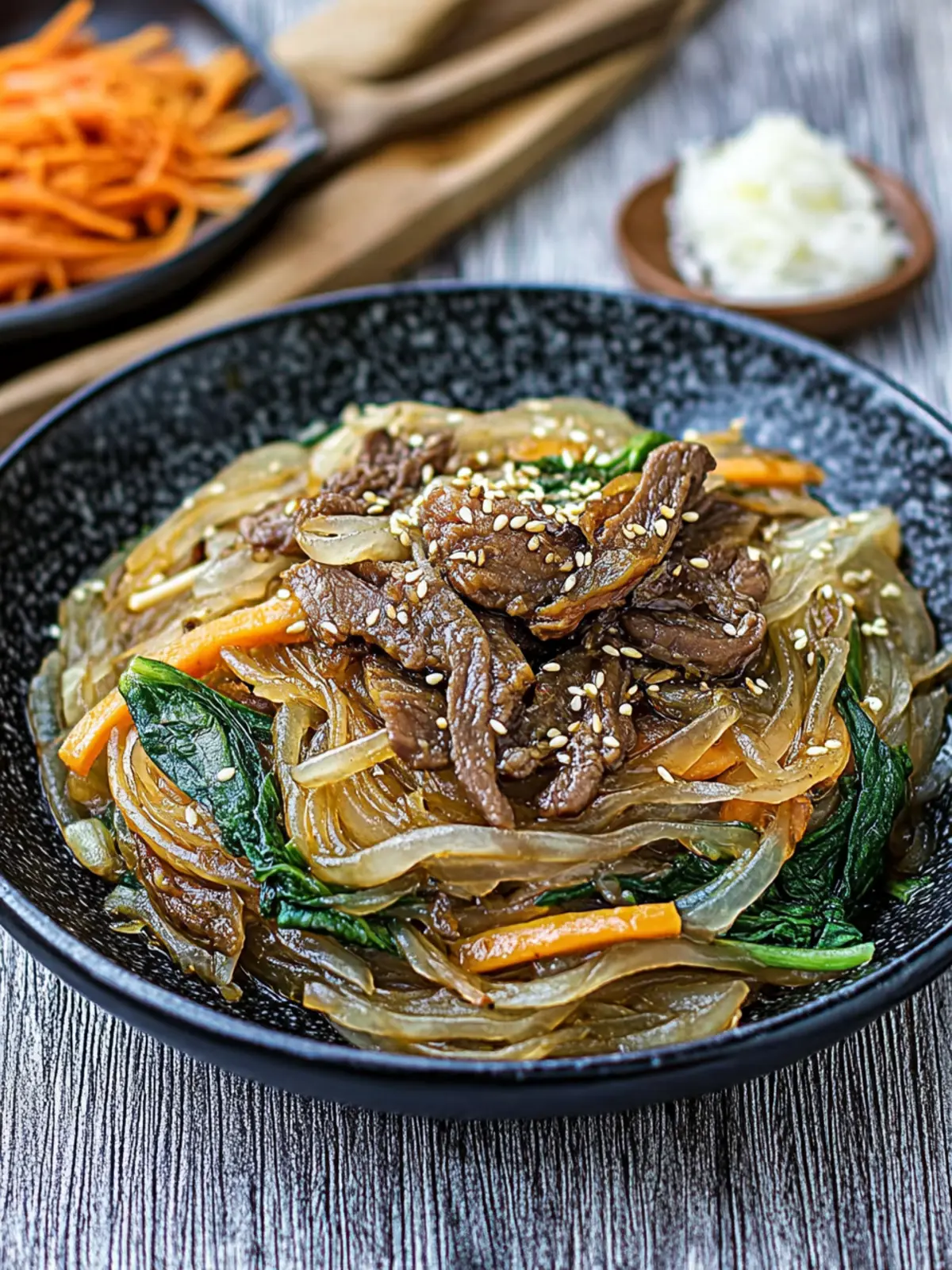
Why is Japchae a Must-Try Dish?
Irresistible flavors: The harmony of sweet and savory from the tender beef, earthy mushrooms, and vibrant veggies creates a delightful explosion for your taste buds.
Quick preparation: With just 15 minutes of prep time, you can serve a delicious meal without sacrificing quality!
Cultural experience: Dive into Korean cuisine right at home, offering a unique dining experience that your family and friends will rave about.
Versatile options: Easily customize with your favorite protein or vegetables to suit your taste.
Crowd-pleaser: Perfect for gatherings, this dish is as appealing visually as it is delicious, making it sure to impress!
Healthy choice: Packed with nutrients from fresh ingredients like spinach and carrots, it’s a wholesome alternative to fast food.
Japchae Ingredients
• Dive into creating authentic Japchae with these essential ingredients!
For the Sauce
• Soy sauce – A key flavor enhancer, balancing saltiness with sweetness.
• Honey or granulated sugar – Adds a touch of sweetness to complement the savory notes.
• Soju or rice wine – Infuses depth; can be substituted with any light alcohol or omitted for a non-alcoholic version.
• Sesame oil – Provides a nutty aroma; extra can be drizzled for garnishing.
• Garlic – Freshly minced for a fragrant kick.
• Freshly ground black pepper – Enhances overall flavor with a slight warmth.
For the Beef
• Rib eye or sirloin beef – Tender cuts that soak up the marinade beautifully; use any protein you prefer.
For the Noodles
• Dried shiitake mushrooms – These add an earthy flavor and chewy texture.
• Dangmyeon Korean Sweet Potato Noodles – Essential for that unique chewy consistency typical of Japchae; don’t substitute with other noodle types.
For the Vegetables
• Baby spinach – Adds color and nutrients; can replace with other leafy greens if desired.
• Onion – Thinly sliced for sweetness when cooked.
• Green onions – Brightens the dish with fresh flavor.
• Large carrot – Cut into matchsticks for a crunchy texture.
For Cooking
• Vegetable oil – For stir-frying, use any neutral oil if you prefer.
• Salt – Season to taste.
• Sesame seeds – A simple yet lovely garnish that adds a nice crunch.
Getting your hands on these ingredients is the first step toward serving a delightful dish that your loved ones will cherish!
How to Make Japchae
-
Whisk the marinade: In a large bowl, combine soy sauce, honey, soju, sesame oil, minced garlic, and black pepper. Toss in the sliced beef and coat thoroughly. Set aside for about 15 minutes to soak in the flavors.
-
Soak the mushrooms: In a medium bowl, place the dried shiitake mushrooms and cover with hot water. Let them soak for about 20 minutes until softened. Remove stems and slice thinly. Set aside.
-
Cook the noodles: Boil a large pot of water over high heat. Add Dangmyeon noodles and cook for 5-7 minutes until they are tender and chewy. Drain, rinse, and chop into 8-inch lengths, tossing with a splash of sesame oil to prevent sticking.
-
Blanch the spinach: Salt the boiling water and immerse the baby spinach for roughly 1 minute, just until wilted. Quickly transfer to an ice bath, then drain and toss with sesame oil and a pinch of salt.
-
Prepare the sauce: In a small bowl, mix together 3 tablespoons of soy sauce, 1 1/2 tablespoons of sugar, 1 tablespoon of sesame oil, minced garlic, and black pepper. Set this sauce aside for later.
-
Cook the beef: In a wok or large pan, heat 1 tablespoon of vegetable oil over medium-high heat. Add the marinated beef, cooking until it’s beautifully browned, then transfer it to a plate.
-
Sauté the onions: Add another tablespoon of vegetable oil into the same pan. Once hot, toss in the sliced onions and green onions, cooking until soft and fragrant. Remove from the pan and set aside.
-
Stir-fry the carrots: If needed, drizzle more oil into the pan, then add the matchstick carrots. Cook until they are tender, then place them on a separate plate.
-
Cook the mushrooms: If the pan is dry, add more oil again and throw in the sliced shiitake mushrooms. Stir-fry until they’re tender, then transfer to the plate with the other vegetables.
-
Combine everything: In the wok, toss the cooked noodles with the sauce until well coated. Gently add the cooked beef, spinach, and sautéed vegetables, tossing everything until the noodles have absorbed the flavors. Serve hot, garnished with sesame seeds.
Optional: For extra flair, sprinkle some chopped cilantro on top before serving.
Exact quantities are listed in the recipe card below.
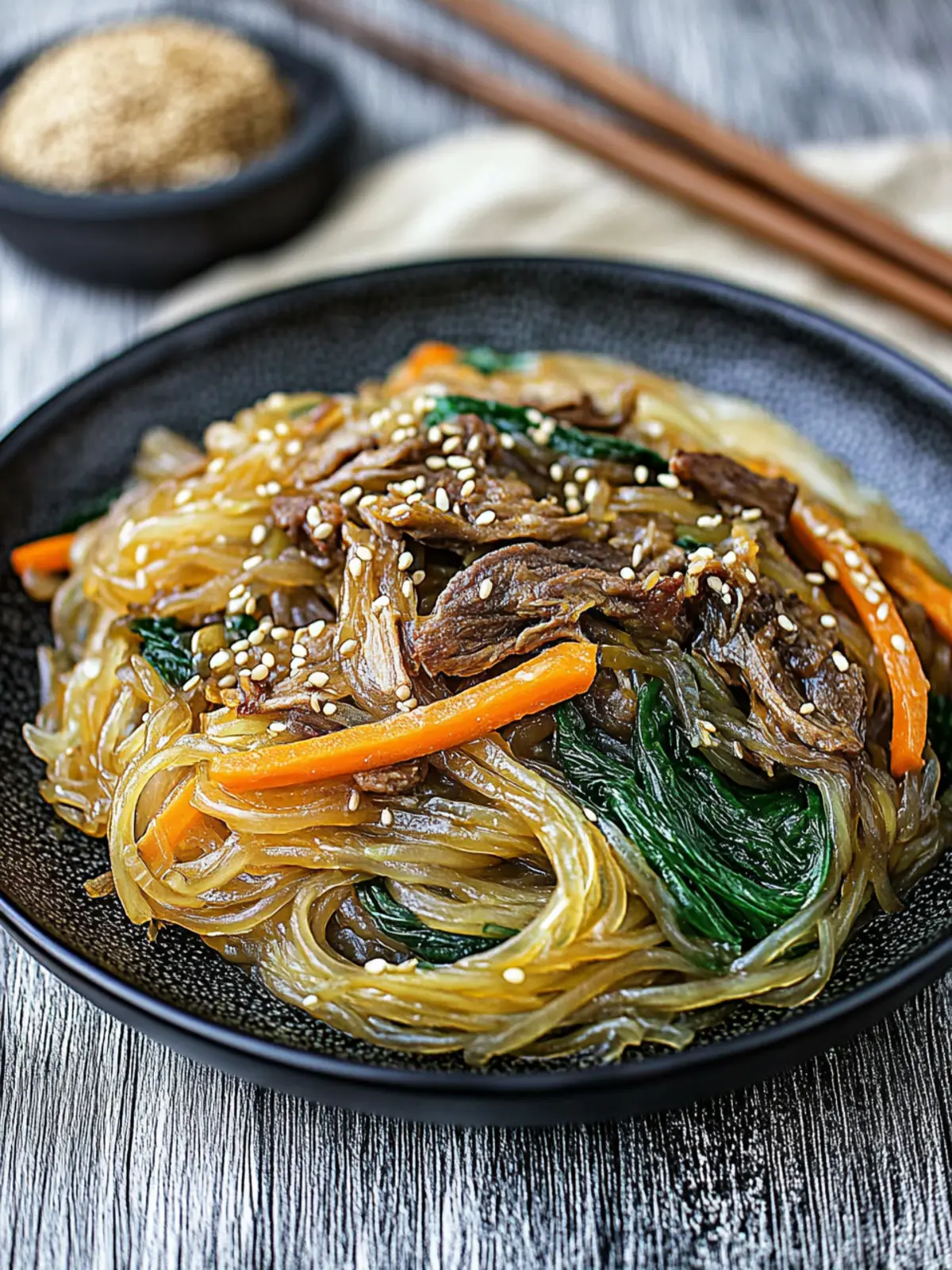
What to Serve with Japchae?
Nothing elevates your meal quite like thoughtful pairings that complement the vibrant flavors of your dish.
- Kimchi: A staple in Korean cuisine, its spicy and tangy notes balance the sweetness of the noodles beautifully.
- Crispy Spring Rolls: These provide a delightful crunch, enhancing the overall texture of your meal while delivering fresh, zesty flavors.
- Steamed Rice: A classic side that soaks up any leftover sauce, making every bite satisfying and comforting.
- Grilled Vegetables: Charred and slightly smoky, they add depth to the plate and echo the earthy flavors in Japchae.
- Miso Soup: This warm, savory soup is a light yet flavorful starter that perfectly prepares the palate for your main dish.
- Sesame Salad: A refreshing mix of greens tossed with sesame dressing brightens the meal with crispiness and an umami punch.
- Cold Soju or Beer: Pairing with a chilled beverage enhances the experience, making for a perfect companion to your delicious feast.
- Mochi Ice Cream: For dessert, this chewy and creamy treat rounds off the meal with a fun texture and sweet finish.
Each of these pairings brings its own unique charm to the table, creating a delightful dining experience that’s sure to please!
Storage Tips for Japchae
Room Temperature: Enjoy your freshly made Japchae right away for the best flavor. If necessary, it can sit out for up to 2 hours at room temperature.
Fridge: Store any leftovers in an airtight container for up to 3 days. Reheat gently in a skillet or microwave, adding a splash of water or sesame oil to prevent drying out.
Freezer: For longer storage, freeze your Japchae in a freezer-safe container for up to 2 months. Thaw in the fridge overnight before reheating.
Reheating: When ready to serve, reheat in a skillet over low heat for best results, stirring occasionally until heated through. Enjoy!
Japchae Customizations
If you’re eager to personalize your Japchae, these delightful variations will help you explore new flavors and experiences in every bite!
- Vegetarian: Replace the beef with tofu or tempeh for a heart-healthy twist that still delivers protein and texture. Perfect for ensuring everyone at the table can enjoy!
- Spicy Kick: Add sliced fresh chili or a dash of gochujang (Korean chili paste) to the sauce for a fiery burst that invigorates every mouthful. Spice lovers rejoice!
- Gluten-Free: Substitute soy sauce with tamari or coconut aminos for a gluten-free alternative that maintains the dish’s savory depth without compromise.
- Nutty Flavor: Toss in a handful of toasted sesame seeds or chopped nuts like cashews toward the end for an added crunch and rich nutty profile in every bite.
- Veggie Boost: Feel free to zip up the nutrition by adding bell peppers, broccoli, or snap peas for more color, texture, and vitamins that provide a satisfying crunch.
- Sweet and Savory: Drizzle a little brown sugar over the vegetables as they sauté to create a caramelized finish that harmonizes beautifully with the savory notes.
- Coconut Creamy: For a unique twist, sauté the veggies in a bit of coconut milk along with the oil for a creamy texture and tropical flair that makes it feel like a mini-vacation on your plate.
- Herb Infusion: Incorporate a splash of chopped fresh herbs, such as cilantro or basil, just before serving to brighten the flavor and add a lovely aromatic note that lifts the whole dish.
Embark on this flavorful adventure, and let your creativity shine through!
Make Ahead Options
These Japchae are perfect for busy home cooks looking to save time during the week! You can marinate the beef and soak the shiitake mushrooms up to 24 hours in advance, ensuring that they are bursting with flavor when you’re ready to cook. You can also prepare the sweet potato noodles and blanch the spinach up to 3 days ahead; just remember to toss them with a light drizzle of sesame oil to prevent sticking. On the day you serve, simply follow the cooking steps, tossing everything together in a hot wok for a quick finish. With these make-ahead tips, you’ll enjoy a delicious, homemade Japchae with minimal effort and maximum flavor!
Expert Tips for Japchae
- Ingredient Quality: Always choose fresh vegetables and quality beef; they enhance the flavor and texture of your Japchae.
- Cutting Technique: Slice the beef against the grain; this ensures tenderness. Avoid thick slices to keep it from being chewy.
- Soak Mushrooms: Don’t rush soaking the shiitake mushrooms; the longer they soak, the better the flavor and texture. Around 20 minutes is ideal.
- Noodle Cooking: Be careful not to overcook the Dangmyeon noodles; they should be tender but still chewy. Aim for 5-7 minutes for perfect results.
- Flavor Balance: Taste and adjust the sauce to your liking; a little extra honey or soy sauce can tailor the flavor profile to your preference.
- Garnish Delight: Don’t forget the sesame seeds! They add not just crunch but also a touch of elegance to your Japchae presentation.
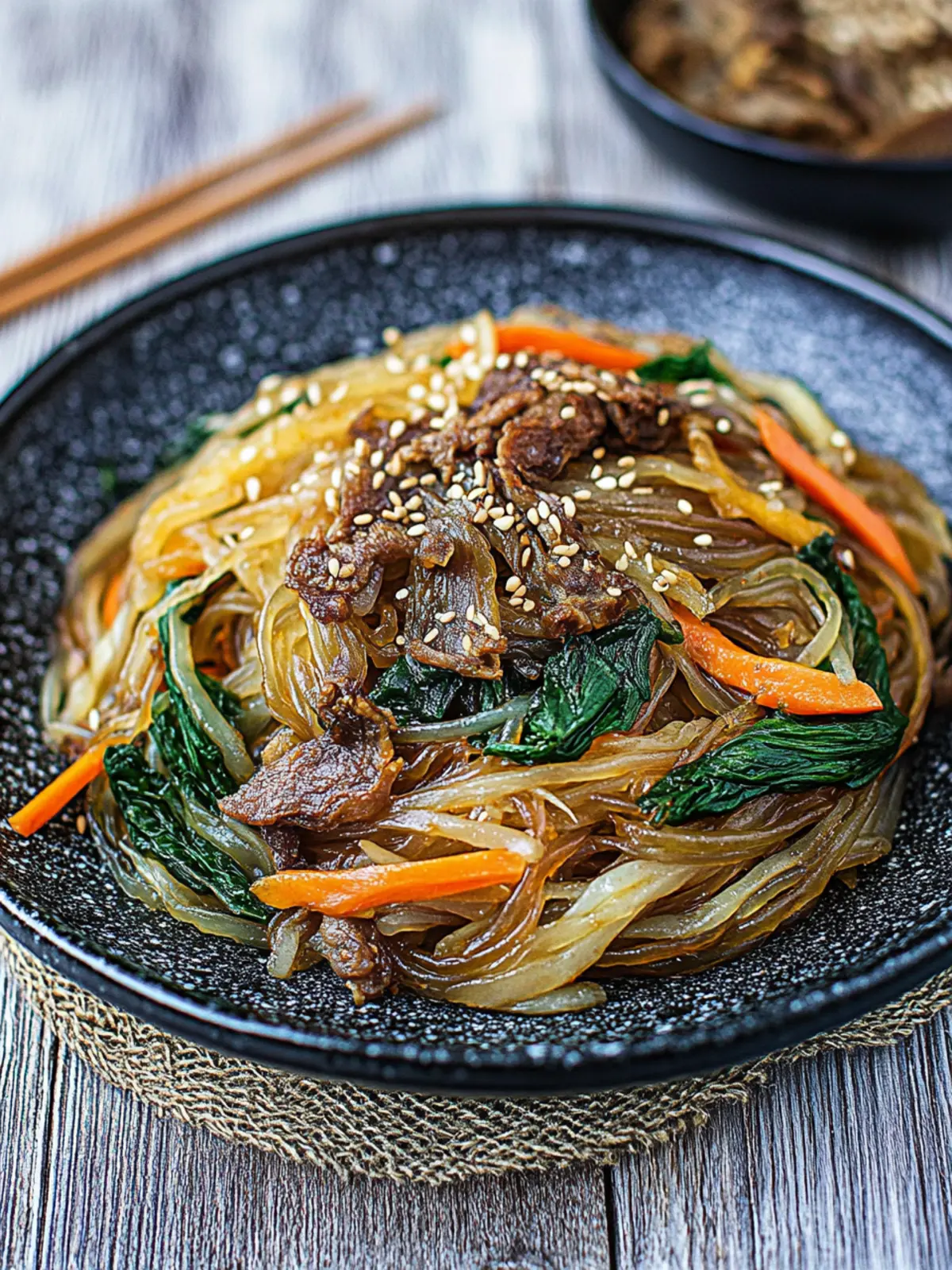
Japchae Recipe FAQs
What type of beef is best for Japchae?
I recommend using rib eye or sirloin beef for your Japchae. These cuts are tender and soak up the marinade beautifully, ensuring each bite is juicy and flavorful. For an alternative, consider chicken or tofu for a lighter version.
How should I store leftover Japchae?
Store your leftover Japchae in an airtight container in the refrigerator. It will keep well for up to 3 days. When you’re ready to enjoy it again, gently reheat it in a skillet or microwave, adding a splash of water or sesame oil to maintain its moisture.
Can I freeze Japchae?
Absolutely! You can freeze your completed Japchae in a freezer-safe container for up to 2 months. To reheat, simply let it thaw in the fridge overnight, then warm it up in a skillet over low heat. Stir occasionally to keep it from drying out.
What if my noodles become too sticky?
If your Dangmyeon noodles turn sticky, try rinsing them with cold water after boiling to remove excess starch. Drizzling a bit of sesame oil while tossing them will also help prevent stickiness. Just keep an eye on the cooking time to achieve that perfect chewy consistency!
Are there any dietary considerations for Japchae?
Yes, consider your guests’ dietary restrictions! This recipe is naturally gluten-free if you use gluten-free soy sauce. If allergies are a concern, you might want to omit the nuts in the sesame seeds or substitute the beef for chicken or a plant-based protein, making it suitable for vegetarians or vegans.
What type of mushrooms can I use in Japchae?
While dried shiitake mushrooms are traditional for adding an earthy flavor, you can also experiment with other mushrooms like cremini or oyster mushrooms if they’re more accessible. Just remember that shiitakes have a unique taste, so choose what you enjoy!
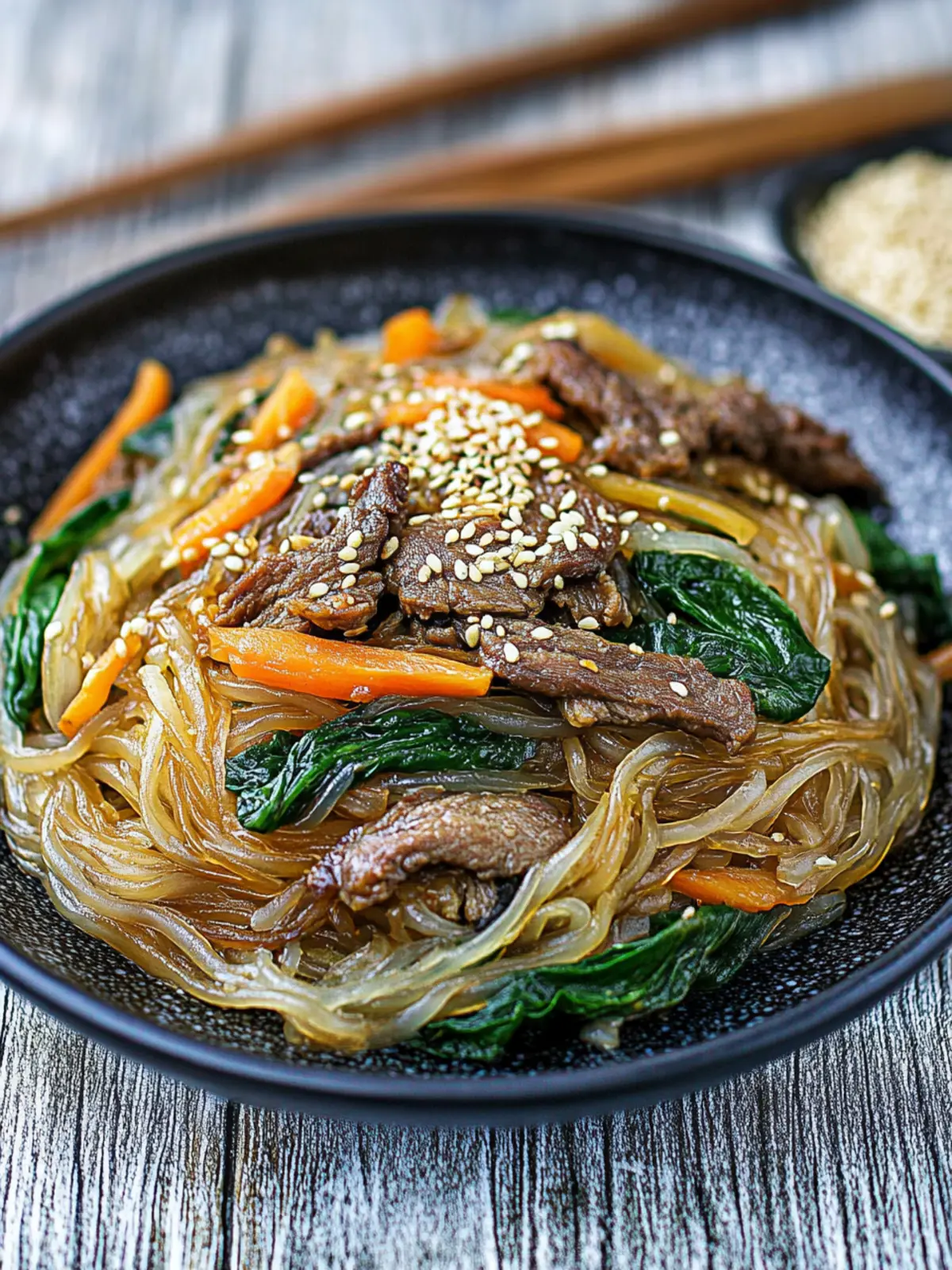
Delicious Japchae: Korean Stir-Fried Sweet Potato Noodles You’ll Love
Ingredients
Equipment
Method
- In a large bowl, combine soy sauce, honey, soju, sesame oil, minced garlic, and black pepper. Toss in the sliced beef and coat thoroughly. Set aside for about 15 minutes to soak in the flavors.
- In a medium bowl, place the dried shiitake mushrooms and cover with hot water. Let them soak for about 20 minutes until softened. Remove stems and slice thinly. Set aside.
- Boil a large pot of water over high heat. Add Dangmyeon noodles and cook for 5-7 minutes until they are tender and chewy. Drain, rinse, and chop into 8-inch lengths, tossing with a splash of sesame oil to prevent sticking.
- Salt the boiling water and immerse the baby spinach for roughly 1 minute, just until wilted. Quickly transfer to an ice bath, then drain and toss with sesame oil and a pinch of salt.
- In a small bowl, mix together 3 tablespoons of soy sauce, 1 1/2 tablespoons of sugar, 1 tablespoon of sesame oil, minced garlic, and black pepper. Set this sauce aside for later.
- In a wok or large pan, heat 1 tablespoon of vegetable oil over medium-high heat. Add the marinated beef, cooking until it’s beautifully browned, then transfer it to a plate.
- Add another tablespoon of vegetable oil into the same pan. Once hot, toss in the sliced onions and green onions, cooking until soft and fragrant. Remove from the pan and set aside.
- If needed, drizzle more oil into the pan, then add the matchstick carrots. Cook until they are tender, then place them on a separate plate.
- If the pan is dry, add more oil again and throw in the sliced shiitake mushrooms. Stir-fry until they're tender, then transfer to the plate with the other vegetables.
- In the wok, toss the cooked noodles with the sauce until well coated. Gently add the cooked beef, spinach, and sautéed vegetables, tossing everything until the noodles have absorbed the flavors. Serve hot, garnished with sesame seeds.